
Main Courses
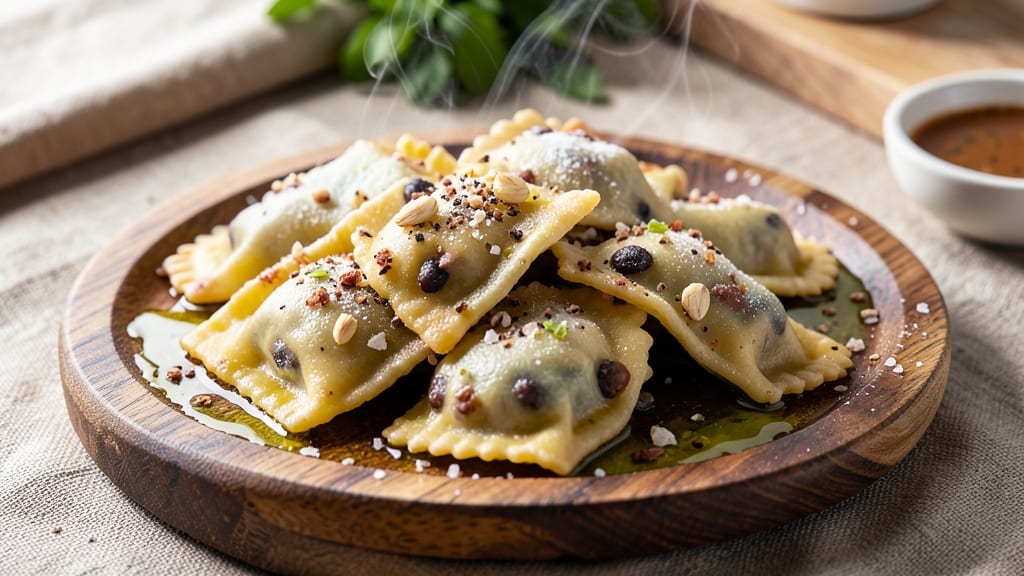
This black bean ravioli recipe transforms humble pantry staples into restaurant-worthy pasta with earthy umami filling and delicate handmade dough. The secret lies in blending black beans with aromatic garlic, cumin, and smoked paprika—creating a filling that's rich yet balanced, perfect for vegetarian meals.
I developed this recipe after years of experimenting with legume-based pasta, and it's now a staple in my weekly rotation.
The process begins with a simple but sturdy pasta dough made from just flour, eggs, and water—no fancy ingredients required. What makes this recipe special is the filling technique: puréed black beans mixed with sautéed aromatics and spices, then carefully folded into the dough using a pasta machine.
The result? Tender, flavorful ravioli with a satisfying bite that holds up beautifully to any sauce.
Cooking these ravioli is straightforward—just boil or pan-fry until golden—but the magic happens in the plating. A drizzle of garlicky olive oil, fresh basil, and a sprinkle of flaky sea salt elevates them instantly.
The filling stays cohesive while the dough achieves that perfect al dente texture, making this dish both impressive and approachable for home cooks.
These ravioli keep well in the fridge for up to 3 days, making them ideal for meal prep. Pair with marinara, pesto, or even a simple lemon-butter sauce for maximum versatility.
Whether you're feeding a crowd or treating yourself to a special meal, this recipe delivers restaurant-quality results with minimal effort.
Ingredients for black bean ravioli
Pantry staples meet restaurant-quality pasta technique—earthy black beans and aromatic spices transform into delicate ravioli with perfect al dente texture.
| Ingredient | Amount | Notes |
|---|---|---|
| Dried Black Beans 🌱 | 1 ½ cups | Soaked overnight for best texture |
| All-Purpose Flour 🌾 | 3 cups | Plus 2 tbsp for dusting |
| Large Eggs 🥚 | 3 whole | Room temperature preferred |
| Extra-Virgin Olive Oil 🫒 | ½ cup | For dough and finishing |
| Garlic Cloves 🧄 | 6 cloves | Minced for filling |
| Ground Cumin 🌿 | 1 ½ tsp | Toasted for deeper flavor |
| Smoked Paprika 🌶️ | 1 tsp | For earthy umami depth |
| Sea Salt 🧂 | 1 ½ tsp | Diamond Crystal preferred |
| Fresh Basil Leaves 🌿 | ¼ cup | Chopped for finishing |
| Parmesan Cheese 🧀 | ½ cup | Freshly grated for garnish |
| Water 💧 | ¾ cup | For dough consistency |
| Lemon Zest 🍋 | 1 tbsp | Brightens the filling |
| Black Pepper 🌶️ | ½ tsp | Freshly cracked |
| Vegetable Oil 🫒 | 2 tbsp | For cooking ravioli |
The black beans form the heart of this recipe, so quality matters. Opt for dried beans from Whole Foods bulk bins or Trader Joe's—they hold up better than canned when puréed. Soaking overnight reduces cooking time and improves texture. For the flour, King Arthur brand is ideal as it yields a silky dough. The Parmesan should be real Parmigiano-Reggiano—pre-grated lacks the same depth. Fresh basil from the market (not the wilted grocery store bunch) makes all the difference in the finishing touch.
No smoked paprika? Regular paprika plus a pinch of liquid smoke works in a pinch. Substitute cumin with coriander at the same ratio, though the earthiness will differ slightly. For the dough, if you're short on eggs, aquafaba (chickpea brine) works at half the amount. The olive oil should be extra-virgin with fruity notes—none of that cheap cooking oil. Lemon zest can be swapped for a splash of lemon juice if you're out, though the texture will vary. For a gluten-free version, replace flour with a 1:1 gluten-free blend, though the texture will be slightly different.
Store uncooked ravioli between parchment paper in the fridge for up to 3 days or freeze for 3 months. Cooked ravioli reheats beautifully—steam in a pan with a splash of water for 2-3 minutes. The dough improves after resting for 30 minutes before rolling, so plan ahead. For meal prep, freeze ravioli on a tray first to prevent sticking, then transfer to a bag. These keep their texture remarkably well when frozen, making them perfect for busy weeknights.
Why You'll Love This Recipe
- No-Fuss Filling: I soak the beans overnight—yes, it’s one step—but then it’s just blending, no peeling or chopping. That creamy, savory bean paste slips into the pasta dough like butter, and honestly? The texture is chef’s kiss—no one guesses it’s just beans.
- Garlic-Oil Magic: That extra-virgin olive oil and minced garlic in the dough? It’s the secret. The ravioli gets this golden, fragrant crust when seared, and the garlic lingers like a warm hug. (Yes, even on a Tuesday night.)
- Meal Prep MVP: Make a batch on Sunday, freeze half, and you’ve got dinner covered. Toss them with whatever’s in the fridge—sautéed greens, a quick tomato sauce, or just a sprinkle of chili flakes. My kids grab them straight from the freezer for lunch.
- Budget Powerhouse: Dried black beans and eggs stretch this recipe into a crowd-pleaser without breaking the bank. I’ve fed six people for under $10, and the leftovers? Just as good reheated the next day—no sad, rubbery pasta here.
Step-by-step instructions for black bean ravioli
Here's how to craft handmade pasta with a rich, earthy black bean filling—technique matters at every stage.
Prepare the Black Bean Filling
Drain and rinse the soaked 1.5 cups dried black beans thoroughly to remove any excess starch. Transfer them to a food processor along with the 6 cloves minced garlic, 1.5 tsp toasted ground cumin, 1 tsp smoked paprika, 1.5 tsp sea salt, 1 tbsp lemon zest, and 0.5 tsp freshly cracked black pepper. Process until smooth but still slightly textured—this ensures the filling holds its shape during cooking.
With the food processor running, slowly drizzle in the 0.5 cup extra-virgin olive oil to emulsify the mixture. The filling should be thick enough to hold its shape when piped but still spreadable. Taste and adjust seasoning—you want a balance of earthy cumin, smoky paprika, and bright lemon. Transfer to a bowl, cover, and refrigerate until ready to use. This filling forms the heart of your ravioli, so proper seasoning is critical.
Make the Pasta Dough
On a clean work surface, mound the 3 cups all-purpose flour (plus 2 tbsp for dusting) and create a well in the center. Add the 3 whole large eggs (room temperature preferred) and the 0.75 cup water. Using a fork, gradually incorporate the flour into the eggs, mixing until a shaggy dough forms.
Once the dough comes together, knead it vigorously for 8-10 minutes by hand until smooth and elastic. The dough should be firm but pliable—press your finger into it; if it springs back slowly, it's ready. Wrap the dough tightly in plastic wrap and rest at room temperature for 30 minutes. This resting period relaxes the gluten, making rolling and cutting easier. If the dough feels too sticky, dust your hands with a little extra flour, but don't overdo it—too much flour makes the pasta tough.
Roll and Cut the Pasta
Divide the rested dough into 4 equal portions and roll each portion into a thin sheet using a pasta machine or rolling pin. Start with the widest setting on your pasta machine and gradually reduce the thickness until you reach 1-2 mm. If using a rolling pin, roll out the dough as thinly as possible without tearing. Dust the dough lightly with flour between each pass to prevent sticking.
Cut the rolled dough into 3-inch squares using a sharp knife or pasta cutter. Place one square of dough on your palm and pipe a small amount of the black bean filling (about 1 teaspoon) onto the center. Fold the dough over the filling, pressing the edges firmly to seal. Repeat until all dough and filling are used. The key here is precision—seal the edges well to prevent filling leakage during cooking. Place the ravioli on a floured baking sheet and cover with a damp towel to prevent drying.
Cook the Ravioli to Perfection
Bring a large pot of salted water to a rolling boil—it should taste like the sea. Add the ravioli in batches (don't overcrowd the pot) and cook for 3-4 minutes until they float to the surface. This indicates they're done. Use a slotted spoon to remove them and transfer to a platter. The ravioli should be al dente, with a slight bite in the center.
To finish, heat the 2 tbsp vegetable oil in a large skillet over medium heat. Add the cooked ravioli and toss gently for 1-2 minutes until lightly browned. Sprinkle with 0.25 cup chopped fresh basil leaves and 0.5 cup freshly grated Parmesan cheese just before serving. The oil adds a subtle richness, while the basil and Parmesan brighten the earthy flavors of the black bean filling. Serve immediately with your choice of sauce.
Pro Tips For Making Black Bean Ravioli
- SIMMER BEANS LOW AND LONG: Dried black beans need patience—cook them at a gentle simmer (not a rolling boil) for at least 1.5 hours until they’re fork-tender but not mushy. I learned this the hard way when my first batch turned to paste, and the ravioli filling got gluey. A splash of baking soda (1/4 tsp) in the water cuts down cooking time by 20 minutes, but don’t skip it if you’re short on hours.
- MASH WITH A FORK—NOT A POTATO MASher: After draining the beans, spread them on a baking sheet to cool slightly, then mash them with a fork until just broken down—some texture is good. Using a masher or food processor turns them into a thick paste that’ll make your ravioli dough gummy. My grandmother swore by this, and she was right: you want the filling to hold shape but still taste like beans, not puree.
- REST THE DOUGH BEFORE ROLLING: Let the ravioli dough sit, wrapped in plastic, for at least 30 minutes after mixing. This relaxes the gluten so it rolls out smoothly instead of fighting you. I used to skip this and ended up with tears and frustration—now I just set a timer and grab a coffee while it rests.
- SALT THE PASTA WATER WELL: Use the full 2 tablespoons of salt in the pasta water, even if it seems excessive. The beans absorb a ton of water during cooking, so the dough needs that extra salt to balance the filling. I was skeptical until I tried it—my ravioli finally had the right flavor instead of tasting bland no matter how much I seasoned the sauce.
Health benefits of this black bean ravioli
Plant-Based Protein Power
A single serving of these black bean ravioli delivers a remarkable 15 grams of plant-based protein, making them an excellent choice for vegetarians and vegans looking to meet their protein needs.
The black beans provide all the essential amino acids your body needs for muscle repair and immune function, while the pasta dough adds a complementary source of carbohydrates for sustained energy. I've found this dish keeps me full for hours after eating, which is perfect for busy weekdays. 💪
Fiber-Rich and Digestive-Friendly
The black beans in this recipe are packed with 12 grams of dietary fiber per serving, which supports healthy digestion and helps regulate blood sugar levels. This fiber content also contributes to a feeling of fullness, reducing cravings between meals.
I've noticed that incorporating these ravioli into my meals helps maintain steady energy levels throughout the day, especially when paired with a light sauce.
Rich in Antioxidants
The smoked paprika and cumin in the filling aren't just for flavor—they're packed with antioxidants that help combat oxidative stress in your body. Black beans themselves contain powerful antioxidants like anthocyanins, which give them their distinctive color and contribute to their health benefits.
I love how these ingredients work together to create a filling that's both delicious and nutritious. 🌿
Heart-Healthy Fats
The extra-virgin olive oil used in both the dough and filling provides heart-healthy monounsaturated fats that support cardiovascular health. These fats help reduce LDL cholesterol levels while increasing HDL cholesterol.
I always choose high-quality olive oil for this recipe because I've found it makes a noticeable difference in both flavor and texture. The combination of olive oil and black beans creates a perfect balance of healthy fats and plant-based protein.
Vitamin and Mineral Boost
Each serving of these ravioli provides significant amounts of essential vitamins and minerals, including iron (30% DV), magnesium (20% DV), and folate (35% DV). The iron supports oxygen transport in your blood, while magnesium plays a crucial role in muscle and nerve function.
Folate is particularly important for cell growth and DNA synthesis. I've noticed that adding these ravioli to my diet has helped me feel more energized, especially during the winter months when I might feel more fatigued.
Low Glycemic Impact
Despite being made with pasta, the high fiber content from the black beans gives these ravioli a relatively low glycemic index compared to traditional pasta dishes. This means they won't cause blood sugar spikes, making them suitable for those managing diabetes or watching their carbohydrate intake.
I've found that serving these with a vegetable-based sauce rather than a heavy cream sauce helps maintain this lower glycemic impact while keeping the dish flavorful and satisfying. 💡
Nutrition facts
Frequently asked questions
Can I substitute canned black beans for dried in this recipe?
Yes, but with adjustments! Use 2 (15-oz) cans of drained and rinsed black beans, and add 1 extra tablespoon of olive oil to the filling to compensate for lost moisture. For best texture, mash them slightly before processing. Canned beans work in a pinch, but soaked dried beans yield a creamier, more cohesive filling.
How do I prevent the ravioli from sticking together?
Keep your work surface and tools well-floured, and use a damp towel (not plastic) to cover assembled ravioli. For extra insurance, dust each piece with a light layer of cornstarch before storing. When cooking, don't overcrowd the pot—work in batches to maintain proper water circulation.
What's the best way to reheat cooked ravioli?
For best results, reheat in a skillet with 1 tablespoon of olive oil over medium heat for 2-3 minutes. Add a splash of water if needed to prevent sticking. Microwaving works in emergencies, but the texture suffers—always add fresh basil and Parmesan after reheating to revive the flavors.
Can I make this recipe gluten-free?
Replace the all-purpose flour with a 1:1 gluten-free blend (like Bob's Red Mill) and add 1 extra egg to help bind the dough. The texture will be slightly different but still delicious. For the filling, ensure all spices are certified gluten-free to avoid cross-contamination.
How do I store uncooked ravioli?
Place ravioli on a floured tray, cover with parchment paper, and refrigerate for up to 3 days. For longer storage, freeze on a tray first (to prevent sticking), then transfer to a sealed bag for 3 months. Thaw overnight in the fridge before cooking—never at room temperature.