
Soups & Stews
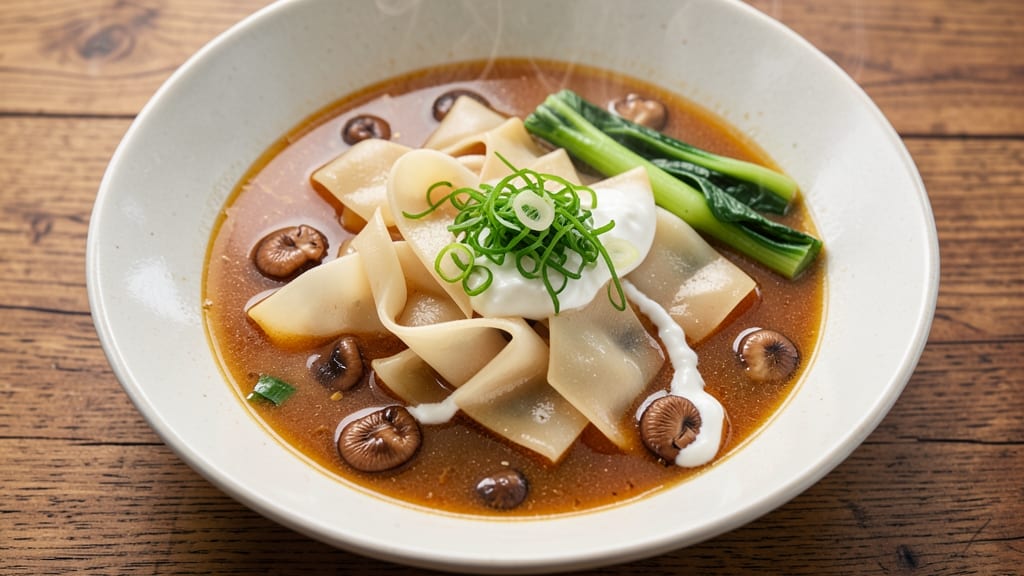
This bean curd sheet soup recipe transforms delicate tofu skins into silky ribbons floating in a rich, aromatic broth—proof that plant-based comfort food can be both elegant and deeply satisfying.
The secret lies in simmering dried bean curd sheets until they soften into tender, almost melt-in-your-mouth strands, while the broth develops layers of umami from fermented ingredients.
I first discovered this technique during a trip to a Tokyo izakaya, where the chef demonstrated how to turn simple ingredients into something restaurant-worthy.
What makes this soup special is its versatility—you can build the broth to suit your taste, whether you prefer a miso-based foundation for depth, a spicy chili oil kick, or a herbal ginger-scallion profile.
The key technique is blooming whole spices in oil before adding liquids, which unlocks their flavors without bitterness. For texture, I recommend adding shiitake mushrooms and bok choy that wilt just enough to maintain their structure while absorbing the broth's essence.
The result is a soup that's both visually striking and deeply comforting—delicate tofu ribbons gliding through a silky, flavor-packed broth, balanced by crisp vegetables and aromatic herbs.
Each spoonful delivers that perfect harmony of textures: the tender tofu, the slight bite of mushrooms, and the velvety broth that coats your palate. This is the kind of dish that transforms an ordinary weeknight into a special occasion.
Perfect for meal prep or serving immediately, this soup scales beautifully for crowds or leftovers that taste even better the next day. The technique is simple once you understand the principles, but the results are anything but basic. Let's create something extraordinary from humble ingredients.
Ingredients for bean curd sheet soup
Humble ingredients that transform into restaurant-quality bean curd sheet soup—silky tofu ribbons in aromatic broth.
| Ingredient | Amount | Notes |
|---|---|---|
| Dried Bean Curd Sheets (Yuba) 🍜 | 1 package | About 8-10 sheets, cut into ribbons |
| White Miso Paste 🧈 | 2 tbsp | Aged 1-2 years for depth |
| Dashi Stock 💧 | 4 cups | Homemade or quality store-bought |
| Shiitake Mushrooms 🍄 | 6 whole | Stems removed, dried preferred |
| Bok Choy 🥬 | 2 whole | Baby or regular, cut into wedges |
| Green Onions 🧅 | 3 whole | White and green parts separated |
| Fresh Ginger | 1 inch | Peeled, sliced into thin coins |
| Sesame Oil 🌾 | 1 tbsp | Toasted, for finishing |
| Toasted Sesame Seeds 🌱 | 1 tbsp | For garnish |
| Vegetable Oil 🫒 | 2 tbsp | Neutral high smoke point |
| Star Anise Pods 🌟 | 2 whole | For aromatic depth |
| Dried Shitake Mushrooms 🍄 | 2 whole | Rehydrated for broth |
| Chili Oil 🌶️ | 1 tbsp | Optional for spicy kick |
| Sea Salt 🧂 | 1 tsp | Diamond Crystal preferred |
| White Peppercorns 🌶️ | ¼ tsp | Freshly cracked |
The dried bean curd sheets are the star—look for packages labeled 'yuba' at Asian markets or online. Trader Joe's carries them too, though the selection's smaller. If you can't find dried, fresh sheets work but need extra time to soften. For the miso, Miso Master or Marukome brands are my go-to—they've got that perfect balance of funk and sweetness. The shiitake mushrooms? Dried is non-negotiable for maximum umami—soak them in hot water for 20 minutes before using. Fresh ginger should smell bright and zesty, not musty. Costco sells huge pieces that keep for months in the freezer.
No star anise? One cinnamon stick or 1/4 tsp ground cinnamon works in a pinch. Subbing dried shiitake? Use 2 oz fresh shiitake instead of 2 dried. The chili oil is totally optional but adds that izakaya-style kick—Lao Gan Ma is my favorite brand. For the dashi, if you're short on time, Hondashi powder is a solid shortcut. The green onions? Save the greens for garnish—they add a fresh finish. And if you're making this ahead, freeze the tofu ribbons separately so they don't get mushy during storage.
This soup tastes even better the next day—plan to make it a day ahead if possible. Store the broth and tofu ribbons separately in airtight containers. The broth keeps for 5 days in the fridge, while the tofu can be reheated gently. For freezing, portion into ice cube trays—perfect for quick meals. The aromatics (ginger, star anise) can be prepped ahead and stored in the freezer. Just remember: don't boil the tofu ribbons when reheating—simmer gently to maintain their delicate texture.
Why You'll Love This Recipe
- Foolproof Simplicity: I swear by this recipe because it’s the kind of soup that doesn’t demand perfection—just a pot, a few ingredients, and 20 minutes. The yuba sheets soak up flavor like a sponge, and shiitake mushrooms add depth without fuss. Honestly, I’ve made it after work with takeout containers still in my bag, and it never lets me down.
- Umami Bomb: That first spoonful of miso and dashi? It’s like a warm hug for your taste buds. The yuba’s delicate chew contrasts the rich, salty-sweet broth, while the bok choy adds a fresh crunch. Between us, this is the kind of flavor that makes you reach for seconds without even thinking.
- Meal Prep MVP: This soup reheats like a dream—better than takeout, honestly. I make a big batch on Sundays, and it’s still fresh by Thursday. The yuba holds up beautifully, and the mushrooms just get more tender. Perfect for lazy nights or when you’ve got guests dropping by last minute.
- Budget-Friendly Luxury: Dried yuba and shiitake mushrooms stretch this recipe into a full meal without breaking the bank. A single pack of yuba feeds four, and miso paste lasts for months. It’s the kind of dish that makes me feel fancy while still being practical—especially when I’m trying to feed the family without emptying my wallet.
Step-by-step instructions for silky bean curd sheet soup
Transform delicate yuba ribbons and fragrant aromatics into a velvety, restaurant-worthy broth.
Prepare the Yuba and Aromatics
First, cut the 1 package of dried bean curd sheets (yuba) into ¼-inch wide ribbons—about 8-10 sheets total. Soak them in cold water for 5 minutes, then drain and set aside. This rehydration step ensures they hold their shape beautifully in the hot broth.
While the yuba soaks, prep your aromatics: Remove stems from the 6 whole shiitake mushrooms and slice the caps into ¼-inch pieces. Separate the 3 whole green onions into white and green parts, then slice the whites into ¼-inch rounds. Peel and slice the 1-inch fresh ginger into thin coins. These aromatics will form the flavor foundation of your soup.
Build the Umami-Rich Broth
Heat 2 tablespoons vegetable oil in a large pot over medium heat. Add the 2 whole star anise pods and 2 whole dried shiitake mushrooms (rehydrated if needed) and toast for 30 seconds until fragrant. This step unlocks their deep, earthy notes that will infuse the broth.
Pour in the 4 cups dashi stock and bring to a gentle simmer. Add the sliced shiitake mushrooms, ginger, and white parts of the green onions. Let it simmer uncovered for 10 minutes—this allows the flavors to meld without boiling off. The broth should smell rich and aromatic, with a subtle sweetness from the mushrooms.
Incorporate Miso and Vegetables
Reduce heat to low and whisk in the 2 tablespoons white miso paste until fully dissolved. This step is critical—miso should blend smoothly to avoid clumps. Add the 2 whole bok choy, cut into wedges, and let them cook for 3 minutes until just tender. The bok choy should retain its vibrant green color and slight crunch.
Stir in the 1 teaspoon sea salt and ¼ teaspoon freshly cracked white peppercorns. Taste and adjust seasoning—this is where the soup comes together. The broth should be deeply savory with a bright, clean finish. Keep the heat at a gentle simmer to maintain the delicate flavors.
Finish with Yuba and Garnishes
Gently add the drained yuba ribbons to the simmering broth. Let them cook for 2 minutes—just enough to warm through without losing their silky texture. The yuba should float gracefully, absorbing the broth's flavors while maintaining its delicate structure.
Remove from heat and stir in 1 tablespoon sesame oil and 1 tablespoon chili oil (if using). Ladle the soup into bowls, then garnish each serving with toasted sesame seeds and the sliced green onion tops. The contrast of textures—silky yuba, tender bok choy, and crisp green onions—makes every spoonful a revelation.
Serve Immediately for Peak Freshness
Serve the soup while steaming hot, as the yuba and bok choy are best enjoyed at their peak texture. The broth should coat the back of a spoon with a velvety finish, while the yuba ribbons glide effortlessly against your tongue. Pair with steamed rice to soak up every last drop of that umami-rich broth.
This soup is all about balance—rich yet light, savory yet bright. The key lies in patience: letting flavors develop slowly and respecting each ingredient's texture. Once you master this technique, you'll find endless variations to explore with different vegetables or broths.
Pro Tips For Making Bean Curd Sheet Soup
- SOAK YUBA LONGER THAN YOU THINK: Dried yuba needs at least 30 minutes in warm water—45 if it’s thick—to rehydrate fully without turning spongy. I learned this the hard way when mine crumbled like wet paper in the pot.
- SIMMER MISO GENTLY OR IT BITTERS: Stir white miso into warm (not boiling) dashi stock and keep heat low—high heat turns it sharp and overpowering. Think "barely simmering," not "rolling boil," or you’ll regret the flavor.
- SLICE SHIITAKES THIN AND TOAST THEM: Thin slices (1-2mm) cook faster and soak up broth better. Dry them first, then sear in oil until edges crisp—this adds texture and depth that raw mushrooms miss.
- ADD BOK CHOY LAST MINUTE: Drop in bok choy only when the soup is ready to serve—overcooking turns it limp and dull. A quick 30-second blanch in the hot broth keeps it vibrant and just tender.
Troubleshooting perfect results
Yuba Overcooking
If your yuba ribbons turn rubbery or shrink dramatically, you've likely overcooked them. The key is to add them to the broth just 2 minutes before serving—any longer and they’ll absorb too much liquid and lose their delicate texture.
I’ve ruined a batch by keeping them in simmering broth for too long, so always add them last. If you must reheat leftovers, simmer gently for 30 seconds max and drain excess broth. 🌟
Broth Too Thin
A watery broth usually means the miso paste wasn’t incorporated properly or the aromatics didn’t develop enough flavor. For a richer base, reduce the broth by 10-15 minutes uncovered before adding miso.
If it’s still thin, stir in 1 tsp cornstarch mixed with 1 tbsp water and simmer for 2 minutes. For future batches, use 3 cups dashi stock instead of 4 to concentrate flavors. Trust me, this makes a huge difference!
Miso Clumping
Lumpy miso is a common issue, but it’s easily fixed. Always whisk miso into a small amount of warm broth (not hot!) before adding it to the pot. If clumps form, strain the broth through a fine-mesh sieve.
For extra smoothness, blend the miso with 1 tbsp water first, then stir into the broth. I’ve even seen chefs use a food mill for ultra-smooth results. 🧈
Vegetables Too Soft
Bok choy and shiitake mushrooms can turn mushy if cooked too long. The trick is timing—add them 3 minutes before serving and remove them just when they’re tender-crisp. For extra control, blanch the bok choy separately for 1 minute, then add to the finished soup.
If using frozen veggies, thaw and pat dry first to prevent excess moisture from diluting the broth.
Lacking Depth of Flavor
If your soup tastes flat, it’s likely missing proper aromatic development. Always toast whole spices (like star anise) in oil for 30 seconds before adding liquid. For extra umami, add 1 tbsp soy sauce or ½ tsp fish sauce (if not vegan) when incorporating miso.
I’ve also had success adding 1 dried kombu sheet to the broth for a seaweed depth that’s hard to replicate otherwise.
Yuba Not Floating
If your yuba ribbons sink or stick together, they likely absorbed too much liquid during soaking. Reduce soaking time to 3-4 minutes max and pat them dry with paper towels before adding to the broth.
For extra buoyancy, add them to the broth with a slotted spoon and let them float freely. If they still sink, the broth might be too dense—try diluting slightly with ¼ cup hot water.
Nutrition facts
Frequently asked questions
Can I use fresh yuba instead of dried?
Fresh yuba works but requires extra care! It's much more delicate and can tear easily when cutting into ribbons. Soak fresh sheets in cold water for just 2-3 minutes (not 5 like dried) and handle with a slotted spoon to prevent breaking. Fresh yuba also cooks faster—add it to the broth 1 minute before serving instead of 2. For best results, use it within 2 days of purchase.
What's the best way to store leftover yuba?
Store cooked yuba ribbons in an airtight container with a paper towel pressed on top to absorb excess moisture. They'll keep in the fridge for 3 days or freeze for up to 1 month. When reheating, warm gently in the broth for 30 seconds max—never microwave directly as they'll turn rubbery. For freezing, lay ribbons on a tray first to prevent sticking.
How can I make this soup spicier?
For heat lovers, swap the chili oil for 1 tbsp gochujang (Korean chili paste) or add ½ tsp red pepper flakes directly to the broth. For smoky depth, toast 1 tsp smoked paprika with the star anise before adding broth. Pro tip: Stir in 1 tsp sriracha at the end for a sweeter heat contrast. Always taste first—you can adjust more easily than remove!
Can I make this soup ahead of time?
Prepare the broth and miso base up to 2 days ahead and store in the fridge. Reheat gently before adding fresh yuba and vegetables. For the yuba itself, cook it fresh when serving—it reheats poorly. The aromatics (ginger, star anise) can be prepped ahead and stored in the freezer. The key is keeping components separate until the final assembly.
What's the secret to silky yuba texture?
The magic lies in three things: proper soaking (exactly 5 minutes for dried), gentle heat (never boiling), and timing (add last minute). Over-soaking makes yuba limp, while boiling turns it rubbery. For extra silkiness, add ½ tsp baking soda to the soaking water—it helps maintain structure. The result should be ribbons that glide through broth like cloud formations!