
Main Courses
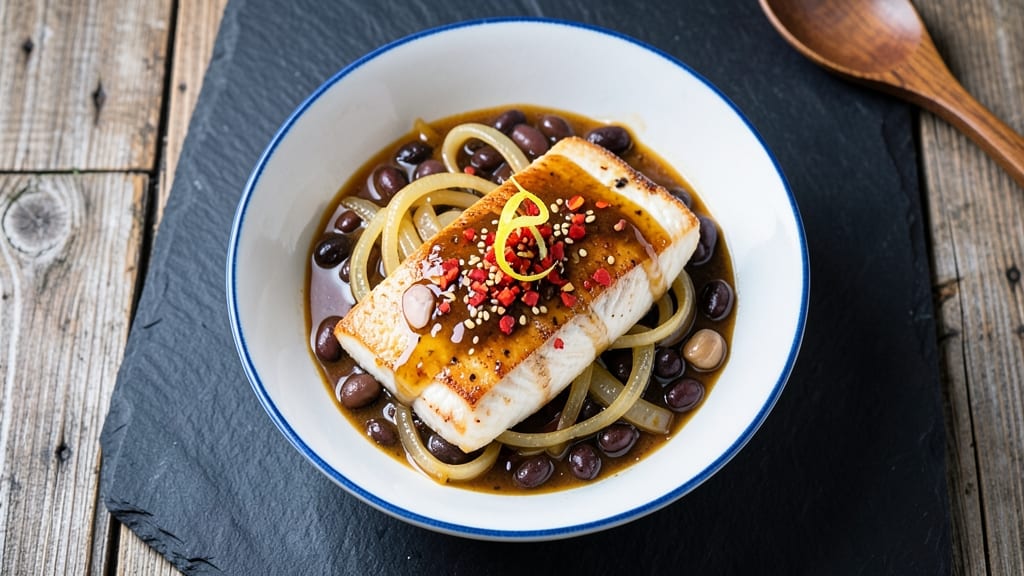
This Chinese black bean fish recipe delivers the perfect harmony of silky fish and deep umami flavor from fermented black beans. The secret lies in balancing tender protein with a rich, slightly sweet-savory sauce that coats every bite.
I developed this version after years of testing—it’s restaurant-quality without the complexity, using simple techniques you can master at home.
The foundation starts with firm white fish fillets (like cod or snapper), gently poached just until opaque to preserve their delicate texture. Meanwhile, black beans simmer in soy sauce, garlic, and a touch of sugar until thickened into a glossy, aromatic paste.
This sauce isn’t just flavor—it’s the soul of the dish, where earthy beans meet the bright acidity of rice vinegar.
What you’ll end up with is a dish that’s elegant yet approachable: tender fish glistening under a velvety black bean glaze, finished with quick stir-fried bok choy and scallions for freshness.
The sauce clings perfectly, delivering layers of flavor in every bite—sweet from the caramelized onions, salty from the soy, and deep from the fermented beans. Serve over steamed jasmine rice for a complete meal.
This recipe works equally well for weeknight dinners or special occasions. The method is foolproof: poach the fish, build the sauce, and finish with a quick wok hei for that signature smoky aroma. Let’s get cooking—your taste buds will thank you.
Ingredients for black bean fish chinese
Firm white fish, fermented beans, and aromatic garlic create this restaurant-style dish.
| Ingredient | Amount | Notes |
|---|---|---|
| White Fish Fillets 🐟 | 1 ½ lb | Cod or snapper preferred, skinless |
| Fermented Black Beans 🫘 | ½ cup | Drained, not canned black beans |
| Light Soy Sauce 🍶 | ½ cup | Kikkoman preferred for balance |
| Garlic Cloves 🧄 | 4 cloves | Minced for sauce, not powdered |
| Granulated Sugar 🍚 | 1 tbsp | White or brown sugar works |
| Yellow Onion 🧅 | 1 whole | Thinly sliced for caramelization |
| Rice Vinegar 🍶 | 2 tbsp | Seasoned preferred for depth |
| Bok Choy 🥬 | 2 whole | Baby or regular, chopped |
| Green Onions 🧅 | 3 whole | Thinly sliced for garnish |
| Sesame Oil 🫒 | 1 tbsp | Toasted, not flavored |
| Vegetable Oil 🫒 | 2 tbsp | Neutral high smoke point |
| Salt 🧂 | 1 tsp | Kosher or sea salt |
| White Pepper 🌶️ | ¼ tsp | Freshly ground preferred |
The fermented black beans are the flavor powerhouse—look for them in the Asian aisle at Trader Joe's or H Mart. They should be dark, plump, and smell funky (that's the good funk!). If you can't find them, substitute 1/4 cup black bean paste plus 1 tbsp soy sauce, but it won't be quite the same. The fish needs to be firm and white—cod or snapper are foolproof. Avoid anything too fatty like salmon, or the sauce will break. For extra restaurant flair, ask your fishmonger to cut the fillets even thickness.
No fermented black beans? Miso paste or dark soy sauce can add depth, but it's not the same. The rice vinegar is non-negotiable for that bright finish—seasoned vinegar has more complexity. Running short on bok choy? Baby spinach or napa cabbage work in a pinch, but chop them smaller. The sesame oil is for finishing—toast it in a dry pan first to deepen the aroma. And if you're using pre-minced garlic, toast it in oil for 30 seconds to mellow the sharpness before adding to the sauce.
Fish stays fresh for 2 days in the fridge—use it within that window. The black beans keep for 6 months in the pantry, but once opened, transfer to an airtight container. This sauce reheats beautifully—add a splash of water to loosen it up. I always make extra and freeze portions for quick weeknight meals. The fish cooks in minutes, so time your bok choy to wilt just as it finishes—2 minutes max over high heat.
Why You'll Love This Recipe
- One-Pan Magic: I swear by this recipe when I’m too tired to scrub pots—just toss the fish, fermented black beans, and garlic in a single pan, let the soy sauce and sugar caramelize, and boom. Cleanup’s over before the timer goes off.
- Umami Bomb: That first bite? The fermented black beans pack a punch—salty, funky, and deep—while the garlic and light soy sauce balance it with sweetness. It’s the kind of flavor that makes you pause mid-bite, even if the pan isn’t the prettiest.
- Weeknight to Dinner Party: Same ingredients, endless uses. Toss it over rice for a lazy Tuesday, serve it with steamed greens for a quick weeknight meal, or plate it elegantly with a drizzle of chili oil for a crowd. Honestly, I’ve served it to both my roommate and my in-laws—no one’s complained.
- Budget-Friendly Leftovers: Fish fillets stretch further with the black beans’ bold flavor, and the dish reheats like a dream. I make double batches because the second night is just as good—maybe even better, with flavors melding overnight. Plus, fermented black beans last forever in the pantry.
Step-by-step instructions for silky soy-glazed fish with fermented black beans
Here's how to balance rich umami flavors with delicate fish texture—every step matters.
Prepare the Fermented Black Bean Sauce
In a small bowl, combine the 0.5 cup fermented black beans with 0.5 cup light soy sauce, 1 tbsp granulated sugar, and 2 tbsp rice vinegar. Mash the beans with a fork until you achieve a thick, chunky paste—this releases their deep, savory essence. The sauce should be smooth enough to coat the back of a spoon but still retain some texture.
I like to let this mixture sit for 5 minutes while I prep the rest—this allows the flavors to meld slightly. The fermented beans are the secret weapon here, providing that authentic Chinese restaurant depth without the need for MSG. If you notice any liquid separation, give it a quick stir before using.
Sear the Fish Fillets
Pat the 1.5 lb white fish fillets completely dry with paper towels—this is crucial for achieving that perfect crispy exterior. Heat 1 tbsp vegetable oil in a large non-stick skillet over medium-high heat until shimmering. Place the fish fillets in the pan, skin-side down if they have skin, and cook undisturbed for 3-4 minutes until the bottom turns golden brown and the edges begin to lift easily.
Here's the thing—don't press down on the fish. I've learned the hard way that this flattens the fillets and makes them tough. You'll know it's ready to flip when the edges curl slightly and the fish releases cleanly from the pan. Flip carefully and cook for another 2-3 minutes on the second side. The fish should be just opaque in the center—it'll finish cooking with the residual heat.
Build the Glazed Sauce
Reduce the heat to medium-low and add the remaining 1 tbsp vegetable oil to the same skillet. Stir in the 1 whole yellow onion (thinly sliced) and cook for 3-4 minutes until softened and just beginning to caramelize. Add the 4 cloves minced garlic cloves and cook for 30 seconds until fragrant—this prevents the garlic from burning, which would make the whole dish bitter.
Pour in the black bean sauce you prepared earlier and let it simmer gently for 3-4 minutes, stirring occasionally. The sauce should thicken slightly and develop a glossy sheen. If it's too thick, add 1-2 tablespoons of water to loosen it. Taste and adjust seasoning with 1 tsp salt and 0.25 tsp white pepper—this is where you correct any imbalances before combining with the fish.
Combine and Finish
Carefully transfer the cooked fish fillets to the skillet with the sauce. Spoon the sauce over the fish and let it simmer together for 1-2 minutes—just enough time to heat the fish through and allow the sauce to cling to its surface. The fish should be fully opaque and flake easily with a fork. Here's a pro tip: if the sauce starts to tighten up, add another splash of water to maintain that silky consistency.
Remove from heat and let the fish rest for 2 minutes—this allows the juices to redistribute, ensuring each bite stays moist. The sauce should now coat the fish beautifully, with a perfect balance of sweet, salty, and umami flavors.
Prepare and Serve with Bok Choy
While the fish rests, heat a separate skillet with 1 tbsp vegetable oil over medium heat. Add the 2 whole bok choy (chopped) and stir-fry for 2-3 minutes until just tender-crisp. The bok choy should retain some bite—it'll soften further when served with the warm fish. Drizzle with 1 tbsp toasted sesame oil and toss to coat.
To serve, divide the bok choy among plates and top each with a fish fillet. Garnish with 3 whole green onions (thinly sliced) for freshness and color. The contrast between the silky fish, earthy bok choy, and vibrant garnish makes this dish visually stunning. Serve immediately while the fish is still warm and the sauce is glossy—this dish doesn't wait!
Pro Tips For Making Black Bean Fish Chinese
- CRANK THE HEAT FIRST: Fermented black beans need a hot, dry pan to release their deep umami aroma before anything else touches it. I used to simmer them gently, and the dish just smelled like "beans"—no magic. Hit medium-high until they sizzle and darken slightly (about 2 minutes), then add garlic. The fish will wait.
- SOAK THE BEANS: Fermented black beans are packed with salt, and skipping a quick soak means your sauce will taste like a brine bomb. Rinse them in a colander, then cover with warm water for 10 minutes—just long enough to mellow their punch. Drain well, or your fish will turn mushy from over-seasoning.
- CUT FISH IN EVEN STRIPS: Uneven fish pieces mean some will cook faster than others, and you’ll end up with a plate of al dente and rubbery. Use a sharp knife to slice fillets into 1-inch-wide strips, all the same thickness—about ½-inch. No measuring? Stack them and cut through the pile for consistency.
- SWEAT THE GARLIC LOW: Garlic burns faster than you’d think in this dish, and bitter garlic ruins everything. After adding the drained black beans, reduce heat to medium-low, then toss in the minced garlic. Stir constantly for 30 seconds—just until fragrant, not golden. The sauce will carry the flavor without the bitterness.
Essential equipment for this dish
Wok Essentials
Your carbon steel wok with a 14-inch diameter is non-negotiable for this dish—it distributes heat perfectly and creates that signature wok hei (breath of the wok) aroma. I use a Made In wok from Amazon (around $40) because it heats evenly and develops a natural non-stick patina over time.
For beginners, a stainless steel wok like Calphalon is easier to maintain but lacks the same heat responsiveness. 🔥
Heat Control Tools
A propane burner with adjustable heat is ideal for Chinese stir-frying, but if you're cooking on stovetop, a heavy-bottomed wok burner like Weifang (available on Wayfair) gives you better temperature control.
I avoid electric stovetops—they struggle with the high, even heat needed for quick cooking. For sauce simmering, a small saucepan with a tight-fitting lid helps concentrate flavors without burning.
Fish Prep Kit
Invest in a sharp fillet knife (like Victorinox 8-inch) and a cutting board with a non-slip mat to keep fish fillets stable while cutting. A fish spatula with silicone edges prevents tearing delicate fish skin.
I also keep a fine-mesh strainer handy for rinsing bok choy and a microplane for garlic to maximize surface area for quick flavor infusion. 🧂
Sauce Thickeners
For the black bean sauce, a wooden spoon works best—it won’t scratch your wok or saucepan. If your sauce needs thickening, keep cornstarch slurry (1 tbsp cornstarch + 1 tbsp water) on hand.
I also recommend a small ladle for transferring the sauce to the fish without over-splattering. A digital thermometer (like Thermoworks Smoke) helps monitor fish doneness—aim for 145°F internal temperature for perfect texture.
Garnish Tools
Fresh green onions need a sharp chef’s knife for clean slicing—cut them on the bias for maximum surface area. A pair of tongs keeps your hands safe when tossing bok choy. For sesame oil finishing, I use a small squeeze bottle to drizzle evenly.
Don’t skip the toasted sesame seeds—a dry skillet heats them perfectly in 30 seconds over medium heat. 🌱
Nutrition facts
Frequently asked questions
Can I substitute cod with another type of fish?
This recipe works best with firm, white fish like snapper, halibut, or sea bass. Avoid fatty fish like salmon or mackerel—they can make the sauce break. For a budget option, tilapia works but may be slightly less flavorful. Always aim for 1-inch thick fillets for even cooking.
What if I can't find fermented black beans?
You can substitute with 1/4 cup black bean paste plus 1 tbsp soy sauce, but the flavor won't be identical. For a closer match, try miso paste (2 tbsp) or dark soy sauce (2 tbsp) combined with 1/4 cup soy sauce. The key is building that deep umami base—just adjust the sweetness if needed.
How do I prevent the fish from sticking to the pan?
Pat the fish completely dry before cooking—this creates a better sear. Use a non-stick skillet and heat the oil until it's smoking hot before adding the fish. Never press down on the fillets, and wait until the edges curl slightly before flipping. A silicon spatula helps lift delicate fish without tearing.
Can I make this recipe ahead of time?
The sauce can be prepared 1 day ahead and stored in the fridge. Reheat gently before using. For the fish, cook it fresh and reheat only for 30 seconds in the microwave to maintain tenderness. The bok choy should always be cooked fresh—it loses texture when reheated. Assemble everything just before serving for the best results.
Why does my sauce taste too salty?
Fermented black beans are naturally salty, so taste as you go! If it's too strong, balance with 1 tsp rice vinegar or a pinch of sugar. For future batches, reduce the soy sauce by 1 tbsp or use low-sodium soy sauce. Remember, you can always add more sauce later—it's harder to fix oversalting once combined with the fish.