
Appetizers
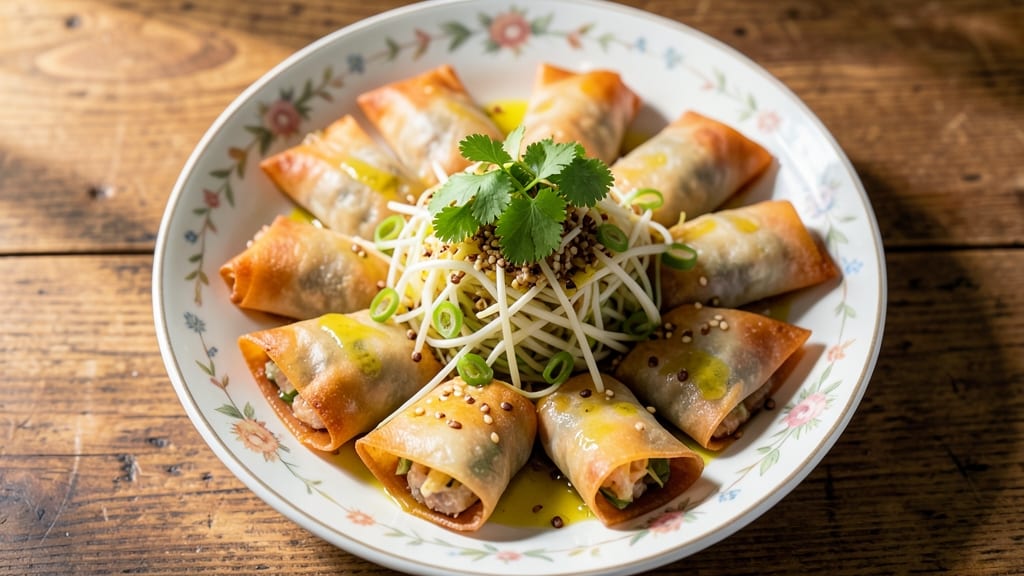
This bean sprout lumpia recipe delivers crispy, golden wraps packed with fresh bean sprouts and aromatic herbs—perfect for appetizers or party snacks. The secret lies in properly prepping the filling and achieving that signature crunch through careful frying.
I've perfected this vegetarian version using traditional lumpia wrappers, ensuring every bite offers a satisfying contrast of textures and flavors.
What makes these lumpia special is the balance of ingredients: tender bean sprouts, finely chopped aromatics, and just the right amount of seasoning to enhance rather than overpower.
The wrappers must be handled gently during assembly to prevent tearing, while the frying process requires consistent oil temperature to achieve that coveted crispy exterior. This recipe serves 4-6 as an appetizer, making it ideal for gatherings or meal prep.
The result is a dish that's both impressive and approachable—crispy on the outside, tender on the inside, with a filling that's fresh yet flavorful. Each roll delivers a satisfying crunch followed by the bright, herby goodness of the bean sprout mixture.
Serve immediately with a sweet chili dipping sauce or tangy vinegar dip for the perfect balance of flavors.
Whether you're hosting a dinner party or simply craving a delicious appetizer, these bean sprout lumpia are sure to impress. The technique is straightforward once you understand the key steps, and the ingredients are simple yet impactful.
Let's get started on creating these crispy, flavorful wraps that bring a taste of Filipino comfort food to your table.
Ingredients for bean sprout lumpia
Twelve crispy wraps packed with vibrant bean sprouts and aromatic herbs—perfect for appetizers or festive gatherings.
| Ingredient | Amount | Notes |
|---|---|---|
| Lumpia Wrappers 🥟 | 12 pieces | Traditional spring roll wrappers |
| Bean Sprouts 🌱 | 3 cups | Fresh, trimmed and rinsed |
| Green Onions 🧅 | 4 whole | Thinly sliced, white and green parts |
| Garlic Cloves 🧄 | 4 cloves | Minced finely for aromatic base |
| Fresh Cilantro 🌿 | ½ cup | Chopped finely, stems removed |
| Lime Juice 🍋 | 2 tbsp | Freshly squeezed for brightness |
| Soy Sauce 🍶 | 1 ½ tbsp | Light or regular, not dark |
| Vegetable Oil 🫒 | 3 cups | For deep frying, 350°F |
| Salt 🧂 | ½ tsp | Diamond Crystal kosher preferred |
| Black Pepper 🌶️ | ¼ tsp | Freshly ground for warmth |
| Vegetable Oil Spray 🫒 | 1 tbsp | For wrapper brushing |
| Sweet Chili Sauce 🍶 | ½ cup | For serving, store-bought or homemade |
The wrappers are non-negotiable—Filipino lumpia wrappers from Asian markets deliver that signature delicate texture. If you can't find them, rice paper wrappers work in a pinch, but they require more moisture during assembly. Look for wrappers with a slight sheen; they should be pliable but not brittle. Bean sprouts must be fresh and crisp—avoid wilted or yellowing ones. For the cilantro, Thai basil can substitute at half the amount if you're feeling adventurous. The green onions add both color and a subtle sharpness that balances the filling's mild sweetness.
No fresh herbs? Dried cilantro at one-quarter the amount works, though the flavor will be less vibrant. Substitute lime juice with lemon juice at equal measure, but the acidity will be slightly different. For the soy sauce, coconut aminos offer a gluten-free alternative with comparable umami depth. If you're avoiding oil, air-fry at 375°F for 8-10 minutes instead of deep-frying—just brush the lumpia with extra oil spray first. The bean sprouts can be prepped ahead and stored in the fridge for 2 days, but keep them dry to prevent sogginess.
Keep assembled lumpia covered with a damp towel while working to prevent drying. Frying oil should reach 350°F—use a thermometer for precision. Once fried, drain on a wire rack to maintain crispiness. These stay crispy for 30 minutes at room temperature, so serve immediately with the dipping sauce. For meal prep, fry a double batch and reheat at 375°F for 5 minutes—they won't be as crispy but still delicious. Store unused wrappers in a cool, dry place for up to 3 months, sealed in an airtight container.
Why You'll Love This Recipe
- The secret’s in the sear: golden wrappers with that pop when you bite in, while the inside stays tender. Fresh cilantro and garlic turn the sprouts from bland to “why didn’t I think of this sooner?”—bright, herby, with just enough bite to keep it interesting.
- No-Chop Nightmare: I swear, the only knife work here is slicing garlic—one clove—and chopping a handful of green onions. The bean sprouts? Just rinse and tear. That’s it. Wrappers thaw in minutes, and the filling comes together while you’re still debating what to watch on TV.
- Crispy-Green Magic: The secret’s in the sear: golden wrappers with that pop when you bite in, while the inside stays tender. Fresh cilantro and garlic turn the sprouts from bland to “why didn’t I think of this sooner?”—bright, herby, with just enough bite to keep it interesting.
- Leftover Hero: These reheat like a dream—crispy edges intact, no soggy wrappers—so I always double the batch. Pack them for lunches, freeze extras for lazy nights, or serve them cold with spicy mayo. They’re the ultimate “I made too much but don’t care” dish.
Step-by-step instructions for crispy bean sprout lumpia
Master these techniques and you'll achieve golden, shatteringly crisp lumpia every time.
Prepare the Fresh Herb Filling
In a large mixing bowl, combine the 3 cups bean sprouts, 4 whole green onions (thinly sliced), 4 cloves garlic cloves (minced), and 0.5 cup fresh cilantro. This is where the flavor foundation builds - the garlic should be finely minced so it distributes evenly throughout the filling.
Add the 2 tablespoons lime juice, 1.5 tablespoons soy sauce, 0.5 teaspoon salt, and 0.25 teaspoon black pepper. Mix gently but thoroughly using your hands - you want the bean sprouts to remain crisp rather than becoming mushy. The lime juice will brighten the flavors while the soy sauce adds depth. Taste and adjust seasoning if needed, remembering these will be wrapped and fried, so flavors will concentrate.
Assemble the Lumpia Wrappers
Lay out all 12 lumpia wrappers on a clean, flat surface. These delicate wrappers should be pliable but not brittle - if they feel stiff, lightly spray them with the 1 tablespoon vegetable oil spray and let sit for 2 minutes. This creates the perfect balance of flexibility and crispness.
Place about 1 tablespoon of filling near the bottom edge of each wrapper. Fold the bottom edge up about 1 inch, then fold in the sides, and finally roll tightly from the bottom up. The key is to keep the filling centered - if it shifts during rolling, the lumpia will be uneven when fried. Seal the final edge with a tiny dab of water to help it stick.
Fry to Perfect Golden Crispness
Heat the 3 cups vegetable oil in a deep fryer or heavy pot to 350°F. Use a deep-fry thermometer to monitor the temperature - oil that's too cool will result in greasy lumpia, while oil that's too hot will burn the outside before the inside cooks. Maintain this precise temperature throughout frying.
Fry the lumpia in batches of 4-5 at a time, turning occasionally with tongs, until they reach a deep golden brown color. This should take about 3-4 minutes per batch. The wrappers should be crisp enough to make a satisfying crackling sound when bitten. Drain on paper towels to remove excess oil, but don't press down - this would make them soggy.
Serve with Sweet Chili Sauce
Arrange the crispy lumpia on a serving platter while still warm. The contrast between the shatteringly crisp wrappers and the fresh herb filling makes each bite exciting. Serve immediately with the 0.5 cup sweet chili sauce on the side for dipping.
For best results, serve while the wrappers are still crisp. The filling will remain fresh and vibrant from the lime juice, while the sweet chili sauce adds the perfect balance of heat and sweetness. These lumpia make an excellent appetizer or light lunch, especially when served with a side of cucumber slices or a simple green salad.
Pro Tips For Making Bean Sprout Lumpia
- Blanch Sprouts First: Toss your bean sprouts in boiling water for 30 seconds before using them—this softens the tough outer layer and keeps them from turning mushy when wrapped. I learned this the hard way after biting into a lumpia with rubbery sprouts that ruined the whole bite.
- Minimize Wrapper Moisture: Pat your lumpia wrappers dry with a paper towel before filling them—wet wrappers stick together and make rolling a nightmare. Even if they look fine, that extra moisture adds up when you’re wrapping dozens.
- Roll Tight, Not Perfect: Crimp the edges of your lumpia tightly but not obsessively—loose seams let filling escape during frying, and over-tightening makes them burst. A little unevenness is fine; what matters is the seal.
- Fry in Batches: Don’t crowd the pan—fry lumpia in single layers with at least an inch between them, or they’ll steam instead of crisp. I used to rush this, and the result was soggy, greasy messes. Patience here makes all the difference.
Essential equipment for this dish
Deep Fryer Essentials
For perfect lumpia, a deep fryer is ideal—it maintains consistent oil temperature and handles multiple pieces easily. I recommend the Ninja Foodi Deep Fryer for its precise temperature control and safety features. If you don’t have one, a heavy-bottomed Dutch oven works just as well.
The key is keeping the oil at 350°F—any lower, and your lumpia will absorb too much oil; too high, and they’ll burn before cooking through. 🌡️
Thermometer Must-Have
A deep-fry thermometer is non-negotiable. The Thermoworks Smoke is my go-to—it’s durable and gives instant readings. Without one, you’re guessing, and that’s how you end up with greasy or burnt lumpia.
Dip it in the oil frequently to monitor temperature, adjusting your heat source as needed. Pro tip: Let the oil return to 350°F between batches to ensure even cooking.
Tongs for Precision
Use long-handled tongs to flip the lumpia without losing oil or burning yourself. I prefer OXO Good Grips—they’re sturdy, have a comfortable grip, and let you handle hot oil safely.
Avoid forks or chopsticks, as they poke holes in the wrappers, causing oil to seep in and making them soggy. Turn the lumpia gently but firmly to ensure even browning on all sides.
Draining Setup
Set up a wire cooling rack over a baking sheet lined with paper towels for draining. This keeps the lumpia crispy by allowing excess oil to drip away rather than sitting in a pool.
If you don’t have a rack, use a slotted spoon to transfer the lumpia to paper towels, but avoid pressing them down—this crushes the delicate wrappers and ruins the texture. 🥟
Oil Selection
Use high-smoke-point vegetable oil like Avocado oil or peanut oil for frying. These oils handle the heat without breaking down, which would make your lumpia taste rancid. Avoid olive oil—its low smoke point causes bitter flavors.
I buy Mazola brand vegetable oil in bulk for its affordability and reliability. Store unused oil in an airtight container in a cool, dark place for up to 6 months.
Nutrition facts
Frequently asked questions
Can I make these lumpia without deep-frying?
Yes! For a lighter version, try air-frying at 375°F for 8-10 minutes, spraying the lumpia with extra oil first. You can also bake them on a wire rack at 400°F for 12-15 minutes, brushing with oil halfway through. The texture will be less crispy but still delicious.
How do I store leftover bean sprout lumpia?
Keep them in an airtight container at room temperature for up to 2 days, but they'll lose crispiness. For longer storage, refrigerate for 3 days or freeze for 1 month. Reheat in a 375°F oven for 5 minutes or air-fry at 350°F for 3-4 minutes to restore crispiness.
What if my lumpia wrappers tear while rolling?
This usually happens if the wrappers are too dry or the filling is too wet. Lightly spray the wrappers with oil spray and let them sit for 2 minutes before rolling. Also, handle the filling gently—don't overpack it. If a wrapper tears, patch it with a small piece of wrapper and water.
Can I use other vegetables in the filling?
Try adding shredded carrots, cabbage, or bell peppers for extra texture. Just be mindful of moisture—veggies like cabbage should be very dry before adding. For a creamier filling, mix in 1 tablespoon grated coconut or tofu crumbles.
Why did my lumpia turn out greasy instead of crispy?
Greasy lumpia usually means the oil wasn't hot enough (350°F is critical) or the wrappers were overloaded with filling. Use a thermometer to check oil temp and fry in smaller batches. Also, drain on a wire rack—not paper towels—to maintain crispiness by letting excess oil drip away.