
Soups & Stews
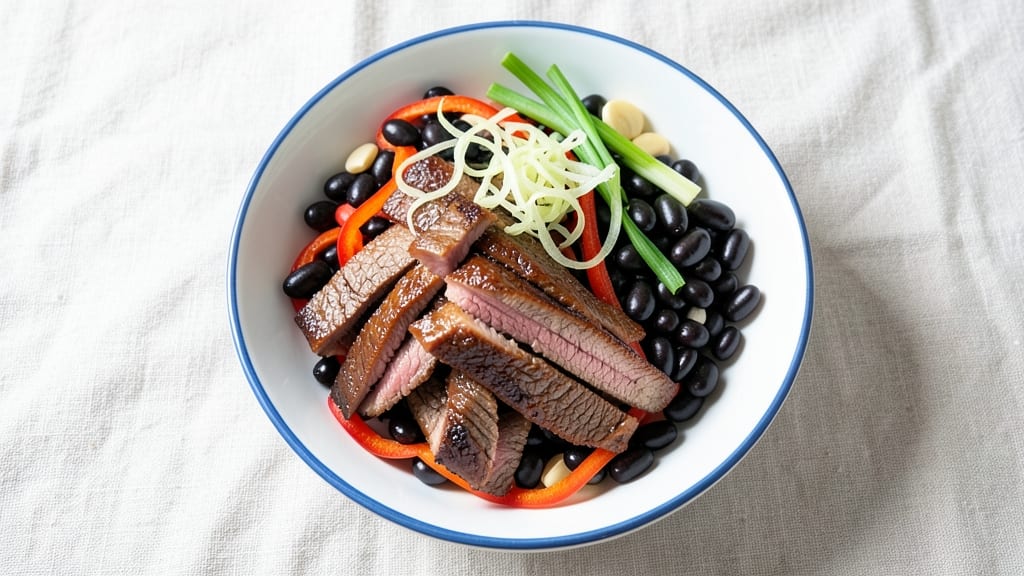
This beef and black bean Chinese recipe delivers restaurant-quality umami in every bite, blending tender beef, earthy black beans, and charred aromatics for a dish that feels like a home-cooked takeout favorite.
The secret lies in proper wok searing—high heat creates that signature caramelized crust while keeping the beef tender, while black beans add texture and depth that transforms this into more than just another stir-fry.
What sets this recipe apart is the balance of techniques: you'll start with a quick sear for that wok-char flavor, then simmer everything together in a fragrant sauce that lets the ingredients meld without losing their individual character.
Traditional Chinese cooking principles guide every step—properly prepping the beef, using the right aromatics, and achieving that perfect balance of sweet, salty, and umami.
The result is a dish that's rich yet balanced, with perfectly tender beef that holds its shape, black beans that add satisfying bite, and a sauce that coats everything without being overly heavy.
The aroma alone will have everyone gathering at the table, and the flavors develop even better when left to sit for 10 minutes before serving.
Serve this over steamed jasmine rice for the complete experience, or pair with noodles for a heartier meal. The recipe scales beautifully for crowds, and leftovers reheat perfectly—making it ideal for meal prep. Let's create this authentic yet approachable Chinese classic.
Ingredients for beef and black bean chinese
Wok-seared beef meets earthy black beans with charred aromatics for restaurant-quality Chinese flavors.
| Ingredient | Amount | Notes |
|---|---|---|
| Flank Steak 🥩 | 1 ¼ lb | Thinly sliced against grain |
| Black Beans 🌱 | 1 ½ cups | Canned, drained and rinsed |
| Garlic Cloves 🧄 | 6 cloves | Minced for aromatic base |
| Fresh Ginger 🌿 | 2 tbsp | Finely grated, peeled |
| Green Onions 🧅 | ½ cup | Sliced, white and green parts |
| Red Bell Pepper 🍆 | 1 whole | Thinly sliced, seeds removed |
| Soy Sauce 🥄 | ⅓ cup | Light or all-purpose |
| Oyster Sauce 🍜 | 2 tbsp | For umami depth |
| Sesame Oil 🫒 | 1 tbsp | Toasted, for finishing |
| Honey 🍯 | 1 tbsp | For balanced sweetness |
| Rice Vinegar 🍶 | 1 tbsp | For acid balance |
| Cornstarch 🌾 | 1 tbsp | For sauce thickening |
| Vegetable Oil 🫒 | 2 tbsp | High smoke point |
| Jasmine Rice 🍚 | 2 cups | Uncooked, for serving |
| Salt 🧂 | 1 tsp | Kosher or sea salt |
The flank steak is non-negotiable here—it stays tender when sliced thin against the grain. Ask your butcher to slice it if you're not comfortable with a sharp knife. For the black beans, low-sodium canned is ideal but rinse them well to cut excess salt. Garlic and ginger are the aromatic backbone, so don't skimp—freshly minced makes all the difference. I grab mine at Whole Foods or the Asian market if I'm making a big batch, but the regular grocery store stuff works fine. Look for ginger with smooth skin and no soft spots, and garlic that's firm and free of sprouts.
No oyster sauce? Hoisin sauce plus a splash of soy sauce gets you close. Fresh ginger too pungent? Dried ground ginger at half the amount works in a pinch. The bell pepper can be swapped for mushrooms if you prefer—just adjust the cooking time slightly. For the honey, agave nectar works 1:1 if you're avoiding refined sugar. And if you're short on cornstarch, arrowroot powder does the same job. The key is balancing the sweet, salty, and umami—taste as you go and adjust accordingly.
This dish reheats beautifully—30 seconds in the microwave with a splash of water keeps it moist. Store leftovers in airtight containers for 4-5 days in the fridge, or freeze for up to 3 months. I always make extra because it's one of those meals that tastes even better the next day. Serve over steamed jasmine rice for the full experience, and don't forget the sesame oil drizzle at the end—that's what makes it sing.
Why You'll Love This Recipe
- I’ll be real: this recipe saves my weeknights. Double the batch, and you’ve got tomorrow’s lunch sorted. The flavors only get better the next day—perfect for packing with rice or tortillas. My kids even ask for it, and that’s saying something.
- One-Pan Magic: Honestly, this dish is my go-to when I don’t want to dirty a dozen pots. Sear the flank steak, toss in the black beans, garlic, and ginger—then let the wok do the rest. Minimal chopping, zero fuss, and still packed with that smoky, savory punch.
- Umami Bomb: Between us, that combo of black beans and seared flank steak? It’s where the flavor actually lives. The garlic and ginger caramelize into something addictive, and the green onions add this bright, fresh finish that cuts through the richness. Not your average beef dish—it’s ridiculously good.
- Lunchbox Hero: I’ll be real: this recipe saves my weeknights. Double the batch, and you’ve got tomorrow’s lunch sorted. The flavors only get better the next day—perfect for packing with rice or tortillas. My kids even ask for it, and that’s saying something.
Step-by-step instructions for wok-seared beef and black bean stir-fry
Transform simple ingredients into a restaurant-worthy stir-fry with bold flavors and perfect texture.
Prep the Flank Steak and Aromatics
Slice the 1.25 lb flank steak thinly against the grain using a sharp knife. This ensures tender bites that cook quickly in the wok. Pat the slices dry with paper towels—moisture prevents proper searing. In a bowl, toss the steak with 1 tablespoon soy sauce, 1 tablespoon rice vinegar, and ½ teaspoon salt. Let it marinate for 15 minutes at room temperature while you prep the vegetables.
Finely mince the 6 cloves garlic and grate the 2 tablespoons fresh ginger. Thinly slice the 1 whole red bell pepper (seeds removed) and ½ cup green onions (white and green parts separated). These aromatics will infuse the dish with deep, charred flavor when wok-seared. Keep them separate until ready to cook—they release moisture at different rates.
Cook the Jasmine Rice
Rinse the 2 cups jasmine rice under cold water until the water runs clear, then drain. Cook according to package instructions (typically 1:1.5 rice-to-water ratio, simmering for 15 minutes after boiling). Fluff the rice with a fork and cover to keep warm. Perfectly cooked rice should be tender but still slightly firm—it absorbs the stir-fry's sauce beautifully without turning mushy.
While the rice cooks, prepare the sauce in a small bowl. Whisk together the remaining ⅓ cup soy sauce, 2 tablespoons oyster sauce, 1 tablespoon honey, and 1 tablespoon cornstarch. Set aside—this will thicken into a glossy, umami-rich coating for the beef and vegetables. The cornstarch acts as a natural thickener, preventing a watery sauce.
Wok-Sear the Beef and Vegetables
Heat a wok or large skillet over high heat until smoking, then add 2 tablespoons vegetable oil. Swirl to coat the surface evenly. Add the marinated flank steak in a single layer and sear undisturbed for 1-2 minutes until the edges turn deep golden brown and crisp. Flip and repeat on the other side—this high-heat sear locks in juices and builds flavor. Remove the beef and set aside.
In the same wok, add another 1 tablespoon vegetable oil (if needed) and stir-fry the garlic and ginger for 30 seconds until fragrant. Add the red bell pepper and cook for 2 minutes until slightly blistered. Toss in the green onion whites first, cooking for 1 minute, then add the green onion greens and 1.5 cups black beans (drained and rinsed). Stir-fry for another 2 minutes until everything is heated through and the beans are lightly charred in spots.
Combine and Finish the Stir-Fry
Return the seared beef to the wok along with any accumulated juices. Pour in the prepared sauce and toss everything vigorously for 1-2 minutes until the sauce thickens and coats the beef and vegetables evenly. The cornstarch mixture will transform into a glossy, clinging sauce—this is your signal the dish is ready. If the sauce thickens too quickly, add 1-2 tablespoons hot water to loosen it.
Drizzle with 1 tablespoon toasted sesame oil and toss one final time. The sesame oil adds a nutty aroma and balances the dish's rich flavors. Taste and adjust seasoning with additional soy sauce or rice vinegar if needed. Serve immediately over the jasmine rice, garnished with extra green onions. The contrast of warm rice and vibrant stir-fry creates a harmonious bite every time.
Pro Tips For Making Beef And Black Bean Chinese
- Slice Steak Against the Grain: The flank steak’s tough fibers need a break—cut it thin (¼-inch or less) and slice diagonally after cooking. I used to overlook this and ended up with chewy bites that ruined the dish. A sharp knife and a steady hand make all the difference.
- Blanch Black Beans First: Skip the canned beans’ mushy texture by blanching dried black beans for 5 minutes in boiling water, then draining. They’ll stay intact and absorb flavors better. (Yes, even if you’re impatient like me—this step is worth the wait.)
- Control the Ginger Heat: Fresh ginger burns faster than you’d think. Sauté it in oil over medium-low heat until fragrant but not browned—about 30 seconds. After burning three batches, I finally figured out that patience here keeps the dish from tasting bitter.
- Use Scallions for Color: Toss in the green onions last and stir just until wilted—their bright green adds visual appeal without overpowering. I skip this when I’m lazy, but the dish is noticeably better when I don’t. (Your future self will thank you.)
Common mistakes when making this recipe
Overcrowding the Wok
This is my biggest pet peeve when making stir-fries—packing the wok too tightly. When you overcrowd, the beef and vegetables steam instead of sear, leading to soggy textures and muted flavors. I always aim for a single layer of ingredients, cooking in batches if needed.
If your wok is too small, use a large skillet, but never sacrifice that critical high-heat sear. 🔥
Skipping the Marination
The 15-minute marinade with soy sauce, rice vinegar, and salt isn't just flavor—it's texture magic. Skipping it means your beef will release juices during cooking, making it tough instead of tender.
Even a quick 10-minute marinade works in a pinch, but don't rush this step. I once forgot and ended up with chewy beef that took forever to chew—never again!
Low and Slow Cooking
Chinese stir-fries thrive on high heat and quick cooking. If you simmer the beef too long, it turns rubbery. The moment your wok stops smoking, you're already losing that wok-char flavor. Keep the heat cranked up and work fast—this isn't a stew!
I use a wok with a flat bottom on my stovetop to ensure even heat distribution. If your stove isn't hot enough, switch to a cast-iron skillet.
Ignoring the Sauce Thickening
The cornstarch slurry is non-negotiable for that glossy, clinging sauce. Without it, your stir-fry will be watery and bland. Whisk the sauce vigorously and add it at the very end—this ensures it coats everything evenly.
If the sauce thickens too fast, a splash of hot water thins it out. I've ruined many batches by adding sauce too early, so always wait until the beef and veggies are nearly done.
Using Cold Ingredients
Cold beef and vegetables draw heat from your wok, causing a temperature drop that kills the sear. Always let your beef sit at room temperature for 15 minutes before cooking.
Cut your vegetables right before stir-frying—pre-cut produce loses crispness and releases excess moisture. I keep my cutting board near the stove so everything stays fresh and ready to go.
Overlooking the Resting Time
This is a game-changer: letting the stir-fry rest for 5-10 minutes before serving. It allows the juices to redistribute, making every bite more flavorful. I know it's tempting to serve immediately, but that extra time makes all the difference.
Cover the dish loosely with foil and let it sit while you finish the rice—you'll thank me later! ✨
Nutrition facts
Frequently asked questions
Can I substitute flank steak with another cut?
Yes! Flank steak is ideal for its tenderness when sliced thin, but sirloin or ribeye work well too. Just slice against the grain for that same melt-in-your-mouth texture. For extra lean options, try chuck roast (sliced thinly) or lean ground beef (browned first). Avoid tougher cuts like brisket—they won't tenderize properly in this quick stir-fry.
How do I make this recipe vegetarian?
Swap the beef for extra-firm tofu (pressed and cubed) or mushrooms (shiitake or oyster). For texture, marinate the tofu in the same soy-vinegar mix for 20 minutes before searing. Add 1 tablespoon vegetable oil to the wok and pan-fry the tofu until golden on all sides. The black beans and aromatics will still deliver that rich, savory depth—just reduce the cooking time by 1 minute since plant-based proteins cook faster.
Why does my sauce turn out too thin?
This usually happens when the cornstarch slurry isn't fully dissolved or the sauce cooks too long. Whisk the sauce vigorously before adding it to the wok, and remove it from heat the moment it thickens—it'll continue thickening as it sits. If it's still too thin, mix 1 teaspoon cornstarch with 1 tablespoon water and stir in. Pro tip: Use a wire whisk for smoother results.
Can I make this ahead of time?
This dish actually tastes better the next day. Store leftovers in an airtight container in the fridge for 4-5 days. Reheat in a skillet over medium heat with a splash of water to restore moisture. For freezing, portion into single-serving containers and freeze for up to 3 months. Thaw overnight in the fridge—never microwave directly from frozen. The flavors meld beautifully overnight!
What sides pair best with this dish?
Steamed jasmine rice is classic, but you can also serve it over egg noodles or cauliflower rice for a lighter option. For extra authenticity, add steamed bok choy or stir-fried bok choy on the side. A simple cucumber salad with rice vinegar and sesame seeds cuts through the richness. And don't forget—hot tea (like jasmine green tea) balances the meal perfectly!