
Soups & Stews
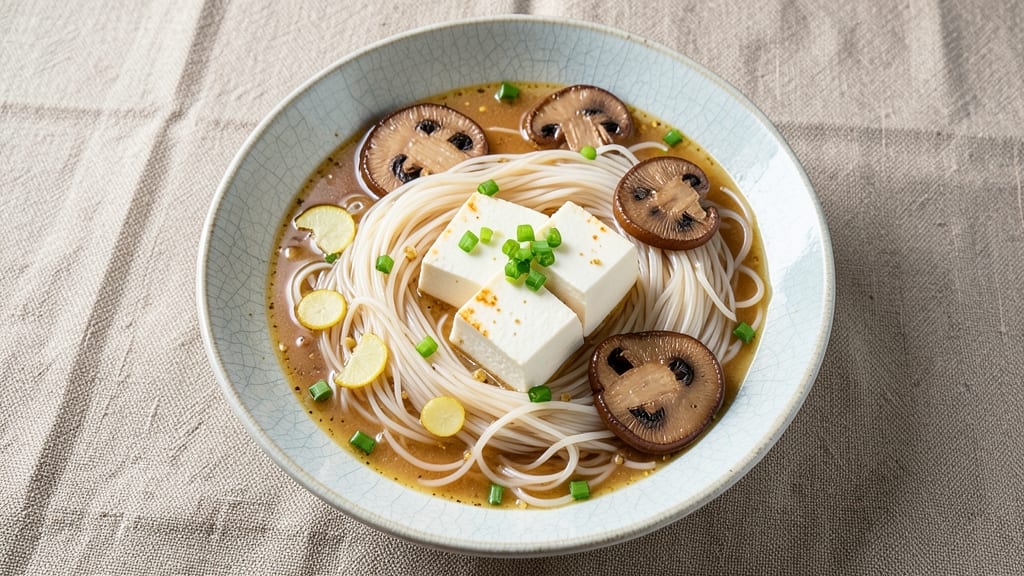
This bean thread noodles soup recipe delivers the signature slippery, silky texture that makes it a Chinese comfort classic. The secret lies in perfectly cooked noodles that glide between your teeth while a rich, aromatic broth carries layers of savory depth.
I've refined this recipe over years to balance traditional techniques with modern convenience—no special equipment required, just patience and precision. The foundation begins with a clear broth, where ginger, garlic, and scallions infuse the liquid with bright, fresh aromatics.
Adding mushrooms and tofu (or chicken for non-vegetarian versions) creates a hearty base that pairs beautifully with the delicate noodles. The key moment comes when the noodles hit boiling water—they must cook just long enough to soften without losing their signature bounce.
What you'll end up with is a bowl of velvety noodles suspended in a fragrant broth that's light yet deeply flavorful. The contrast between the slippery noodles and tender ingredients creates every bite.
This soup is equally satisfying as a light lunch or comforting dinner, especially when topped with fresh herbs and a drizzle of chili oil for heat. For variations, try adding tomato for a tangy twist or swapping in shiitake mushrooms for deeper umami.
The beauty of this recipe lies in its adaptability—whether you keep it classic or experiment with modern flavors, the technique remains the same. Let's get cooking!
Ingredients for bean thread noodles soup
Fourteen ingredients transform into velvety noodles and aromatic broth for this vegetarian comfort classic.
| Ingredient | Amount | Notes |
|---|---|---|
| Bean Thread Noodles 🍜 | 8 oz | Dried, uncooked, high-quality brand |
| Firm Tofu 🧀 | 1 lb | Extra-firm, pressed and cubed |
| Shiitake Mushrooms 🍄 | 8 whole | Fresh, stems removed, sliced |
| Fresh Ginger 🧄 | 2 tbsp | Finely grated, aromatic variety |
| Garlic Cloves 🧄 | 6 cloves | Peeled, minced, fresh preferred |
| Green Onions 🧅 | 4 whole | White and green parts separated |
| Vegetable Broth 💧 | 6 cups | Low-sodium, homemade or store-bought |
| Sesame Oil 🫒 | 1 tbsp | Toasted, for aroma |
| Light Soy Sauce 🍶 | 2 tbsp | Kikkoman preferred |
| Dark Soy Sauce 🍶 | 1 tbsp | For color depth |
| Cornstarch 🌾 | 1 tbsp | For noodle coating |
| Vegetable Oil 🫒 | 2 tbsp | High smoke point |
| Fresh Cilantro 🌿 | ¼ cup | Chopped, for garnish |
| Chili Oil 🌶️ | 1 tbsp | Optional, for heat |
| Sea Salt 🧂 | 1 tsp | Adjust to taste |
The bean thread noodles are non-negotiable for that signature slippery texture. Mama Fu's or Nongshim are reliable brands—avoid the cheap, thin varieties that disintegrate. If you can't find them, rice vermicelli works in a pinch, though the texture won't be identical. The tofu should be extra-firm and pressed for at least 30 minutes to remove excess water. For mushrooms, fresh shiitake from the Asian market delivers the best umami, but cremini mushrooms suffice if that's what's available. Ginger and garlic are the aromatic backbone—freshly grated ginger releases more flavor than pre-minced, and roasted garlic adds a sweet depth if you're feeling ambitious.
No firm tofu? Extra-firm tofu pressed for 1 hour works just as well. Swap shiitake for oyster mushrooms or cremini—they'll give you a meatier bite. Running low on sesame oil? Toasted peanut oil adds a similar nuttiness. The soy sauces are crucial: light soy for saltiness, dark soy for color. If you only have one, use light soy and add a pinch of molasses for depth. For the broth, homemade vegetable broth with carrot, celery, and onion creates the clearest base, but low-sodium store-bought is perfectly fine. The cornstarch slurry is what gives the noodles their signature slippery coating—don't skip it, even if it seems like overkill.
Store uncooked noodles in an airtight container for up to 6 months—they'll keep indefinitely in the freezer. Cooked noodles last 3 days refrigerated, but they're best enjoyed fresh. The broth can be made ahead and reheated gently—just add a splash of water if it reduces too much. For meal prep, assemble bowls without the noodles, store broth separately, and cook noodles fresh when ready to serve. The chili oil and cilantro should be added last to preserve their freshness—store-bought chili oil keeps for 6 months unopened, while fresh cilantro wilts within 5 days in the fridge.
Why You'll Love This Recipe
- No-Chop Nightmare: I swear by this recipe on days when I’m too tired to mince garlic. Just slice the ginger thick, smash the tofu into cubes, and let the shiitakes soak up the broth—no knife skills required. The noodles? They’re already pre-cooked, so it’s a matter of minutes, not hours.
- Umami Bomb: That first sip hits different. The shiitakes deepen the broth while the ginger and garlic add a sharp, bright kick—like a warm hug for your taste buds. The tofu soaks up all the flavor, and the bean threads? They turn silky-smooth when hot, wrapping every bite in that rich, savory goodness.
- Leftover Goldmine: This soup only gets better the next day. The noodles soften just right, the tofu stays firm but absorbs even more flavor, and the mushrooms? They practically melt into the broth. Pack it for lunch or reheat for dinner—it’s my go-to for lazy afternoons.
- Budget Meal Hero: A single bag of bean thread noodles feeds four, and shiitakes last longer than you’d think. Tofu’s cheap, ginger’s a pantry staple, and garlic? Always on sale. For under $10, you’ve got a restaurant-worthy bowl that still leaves room for veggies or an egg on top. Win.
Step-by-step instructions for silky bean thread noodles soup
Here's how to create a velvety, restaurant-quality noodle dish with perfect texture and depth of flavor.
Prepare the Tofu and Mushrooms
Press the 1 lb firm tofu for 20 minutes between two paper towels with a heavy pan on top. Cut into ½-inch cubes and set aside. In a separate bowl, toss the 8 whole shiitake mushrooms (stems removed, sliced) with 1 tsp sea salt and let sit for 10 minutes to draw out moisture.
Heat 2 tablespoons vegetable oil in a large wok or deep skillet over medium-high heat. Add the tofu cubes and cook for 4-5 minutes until golden brown on all sides. Remove and set aside. In the same pan, add the mushrooms and cook for 3-4 minutes until tender but still holding their shape. You want them to release their earthy umami flavor without turning mushy.
Build the Aromatic Broth Base
Add 2 tablespoons fresh ginger and 6 cloves garlic cloves to the same skillet and sauté for 30 seconds until fragrant. Pour in 6 cups vegetable broth and bring to a gentle boil. Reduce heat to medium-low and let it simmer for 8-10 minutes to allow flavors to meld. This step develops the foundation of your soup's complex taste profile.
While the broth simmers, separate the 4 whole green onions into white and green parts. Finely chop the white parts and set aside. Thinly slice the green parts for garnish later. Stir 2 tablespoons light soy sauce and 1 tablespoon dark soy sauce into the simmering broth. The dark soy sauce will give your soup that beautiful caramelized color while adding depth.
Cook the Bean Thread Noodles
In a small bowl, whisk together 1 tablespoon cornstarch with 2 tablespoons cold water to make a slurry. Add this to the simmering broth and stir continuously for 1-2 minutes until slightly thickened. This creates a silky coating for the noodles that prevents them from sticking together.
Rinse the 8 oz bean thread noodles under cold water for 30 seconds to remove excess starch. Add them to the broth and cook for 3-4 minutes until they float to the surface. They should be tender yet still slightly chewy—this is key for their signature slippery texture. The noodles will continue cooking as they absorb the hot broth.
Finish and Assemble the Soup
Return the tofu and mushrooms to the broth along with the chopped green onion whites. Stir in 1 tablespoon sesame oil and let the soup simmer for 2 more minutes. Remove from heat and let it sit for 5 minutes to allow flavors to settle. This resting period ensures each spoonful delivers balanced taste.
Ladle the soup into bowls and garnish with the sliced green onion greens and ¼ cup chopped fresh cilantro. Drizzle each serving with 1 tablespoon chili oil for a touch of heat. The contrast between the silky noodles, tender tofu, and earthy mushrooms creates a harmonious texture experience in every bite.
Pro Tips For Making Bean Thread Noodles Soup
- SOAK NOODLES SEPARATELY: Bean thread noodles clump like glue if tossed in with everything else—trust me, I’ve fished them out of the soup more times than I’d admit. Soak them in a bowl of cold water for 10-15 minutes before cooking, then drain and rinse. This keeps them distinct and prevents a mushy, tangled mess in your broth.
- SLICE TOFU THIN: Thick tofu cubes turn to rubber when simmered, no matter how long you cook them. Cut firm tofu into ¼-inch slices lengthwise (like steak) instead of cubes—this ensures even cooking and a tender bite. Pro tip: Pat them dry first, or they’ll steam instead of sear.
- STIR-FRY MUSHROOMS FIRST: Shiitake mushrooms release their umami punch when they sweat in oil, not when they’re submerged in soup. Sauté them in a dry pan for 3-4 minutes until the edges darken—this concentrates their flavor. Add garlic and ginger after they’re browned, or you’ll just boil away their aroma.
- SALT THE BROTH LATE: I used to add salt early, only to realize the noodles absorbed it unevenly, leaving some bland. Wait until the soup is almost done, then season with a splash of soy sauce or a pinch of salt—this lets the noodles soak up flavor evenly in the last 2 minutes of cooking. (Yes, even if you’re impatient like me.)
Pro cooking tips for this recipe
Broth Clarity Secrets
For that crystal-clear broth, strain your vegetable broth through a fine-mesh sieve after simmering—this removes any sediment that clouds the liquid. I use a cheesecloth-lined strainer for the smoothest results.
If you're making homemade broth, simmer just the carrot, celery, and onion bases without any meat or bones to ensure clarity. For extra brightness, add a pinch of white pepper to the broth while simmering—it enhances flavor without altering color. 💧
Noodle Texture Mastery
The 3-4 minute cook time for bean thread noodles is critical—they should float but still have a slight bite. Overcooking turns them mushy, while undercooking leaves them too chewy. Rinse them briefly under cold water before cooking to remove surface starch, which prevents clumping.
Pro tip: Use hot broth (not boiling) to finish cooking the noodles—they'll absorb heat faster and maintain their signature slipperiness. ✨
Tofu Browning Trick
Pat tofu cubes extra dry with paper towels before cooking—they'll brown better and absorb less oil. For deeper flavor, add ½ tsp smoked paprika to the oil before frying.
I also like to par-cook the tofu in the broth for 5 minutes before adding it back to the wok for final browning—this ensures even cooking and prevents a dry texture. 🧀
Flavor Layering Order
Add ingredients in this sequence for balanced flavor:
- aromatics (ginger/garlic),
- broth,
- soy sauces,
- cornstarch slurry,
- noodles,
- protein/mushrooms.
This prevents overpowering flavors and lets each component shine. The cornstarch slurry should be added just before the noodles—it coats them instantly for that signature slippery feel. 🌶️
Equipment Upgrades
A wok with high sides is ideal for this recipe—it contains splatter while allowing even heat distribution. If you don't have one, a deep skillet works fine. For the cornstarch slurry, I recommend a small glass bowl—it's easier to whisk than plastic and won't absorb flavors.
A fine-mesh strainer (like the OXO Good Grips) is worth investing in for that restaurant-quality broth clarity. 🔥
Make-Ahead Shortcuts
Prep the broth and protein components a day ahead—store them separately in airtight containers. Reheat the broth gently on the stove, then add fresh cornstarch slurry and noodles just before serving.
For the tofu, marinate it overnight in 1 tbsp soy sauce + 1 tsp sesame oil for extra flavor. The noodles themselves shouldn't be pre-cooked—they're best added fresh to hot broth. ⏰
Nutrition facts
Frequently asked questions
Why do bean thread noodles turn mushy when cooked?
Overcooking is the main culprit—they should cook for just 3-4 minutes until they float but still have a slight bite. Always rinse them briefly under cold water first to remove excess starch, which prevents clumping. Cooking them in hot (not boiling) broth at the end helps maintain their signature slippery texture.
Can I substitute tofu with another protein?
For a non-vegetarian version, swap tofu for chicken breast or shrimp. Cut chicken into small pieces and cook until fully done (no pink), while shrimp should cook for just 2-3 minutes per side. For a vegetarian alternative, try tempeh or king oyster mushrooms for a meatier texture.
How do I make this soup spicier?
Add 1-2 teaspoons of chili oil at the end for immediate heat, or stir in ½ teaspoon of red pepper flakes with the soy sauces. For a smoky kick, include ½ teaspoon of gochujang (Korean chili paste) in the broth. Always taste as you go—start with less and adjust!
Can I make this soup gluten-free?
Yes! Simply replace the soy sauces with tamari or coconut aminos (both gluten-free). Check your vegetable broth label to ensure it's also gluten-free. The cornstarch slurry can be made with arrowroot powder instead. All other ingredients are naturally gluten-free.
What's the best way to store leftovers?
Let the soup cool completely, then store in an airtight container in the fridge for up to 3 days. Reheat gently on the stove—never microwave directly. For the noodles, cook them fresh when reheating for the best texture. The broth can be reheated separately and combined with freshly cooked noodles.