
Main Courses
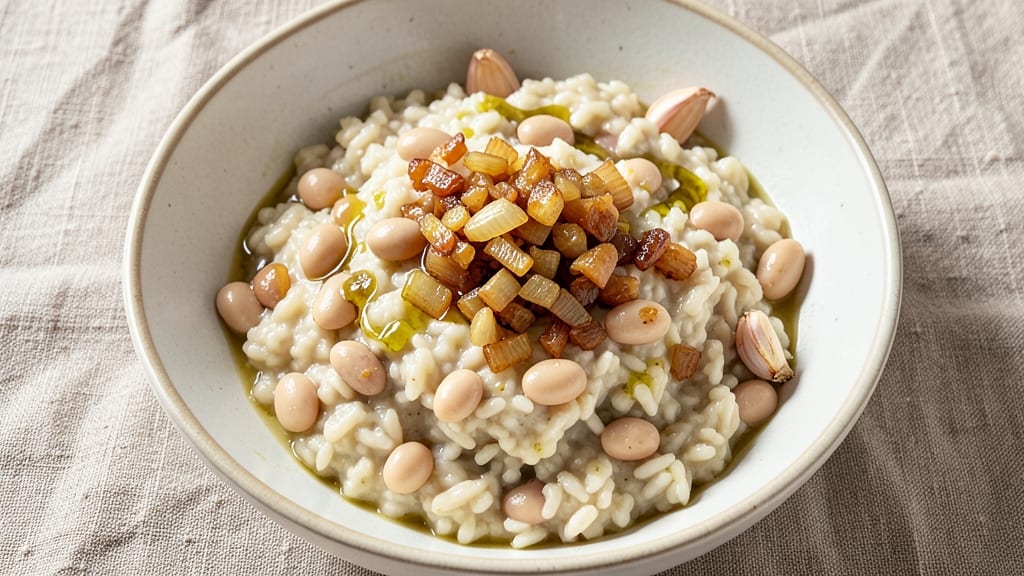
This bean risotto recipe transforms humble white beans and Arborio rice into a creamy, restaurant-worthy vegetarian dish that feels indulgent yet balanced. The secret lies in toasting the beans first—whether fresh or canned—to deepen their umami richness before they melt into the risotto's velvety texture.
What starts as simple ingredients becomes a luxurious one-pot meal where each spoonful delivers tender rice, earthy beans, and nutty Parmesan in perfect harmony.
The process is straightforward but requires attention to technique: gradual broth additions, constant stirring, and patience as the rice absorbs liquid while maintaining its signature al dente bite. White beans add natural creaminess without dairy, while Parmesan (or a vegan alternative) elevates the dish with a salty, umami depth.
The finishing touches—bright lemon zest, fresh parsley, and a drizzle of olive oil—cut through the richness and create that final restaurant-quality shine.
By the time you twirl your first forkful, you'll understand why this risotto deserves a place at your dinner table. The texture is creamy yet still has that satisfying resistance, while the flavor balances earthy beans, tangy lemon, and rich cheese in every bite.
It's the kind of dish that transforms a simple weeknight into something special—without requiring fancy ingredients or hours in the kitchen.
Pair it with roasted asparagus or a crisp green salad for a complete vegetarian meal, or serve it alongside crusty bread to soak up every last drop of that luxurious sauce.
The best part? Leftovers reheat beautifully, making it perfect for meal prep or feeding a crowd. Let's get cooking—your taste buds will thank you.
Ingredients for bean risotto
Simple ingredients transform into a velvety, restaurant-style risotto with earthy beans and nutty Parmesan.
| Ingredient | Amount | Notes |
|---|---|---|
| Arborio Rice 🍚 | 1 ½ cups | Unrinsed for optimal starch release |
| White Beans 🥄 | 1 ½ cups | Canned, drained and rinsed or cooked fresh |
| Vegetable Broth 💧 | 6 cups | Homemade or high-quality low-sodium |
| Extra-Virgin Olive Oil 🫒 | ⅓ cup | Fruity, not bitter |
| Yellow Onion 🧅 | 1 whole | Finely diced, about 1 cup |
| Garlic Cloves 🧄 | 4 cloves | Minced, about 1 tbsp |
| Dry White Wine 🍷 | ½ cup | Medium-bodied, like Pinot Grigio |
| Parmesan Cheese 🧀 | ¾ cup | Freshly grated, finely shredded |
| Lemon Zest 🍋 | 1 tbsp | From 1 medium lemon |
| Fresh Parsley 🌿 | ¼ cup | Chopped, flat-leaf preferred |
| Salt 🧂 | 1 ½ tsp | Diamond Crystal kosher salt |
| Black Pepper 🌶️ | ½ tsp | Freshly cracked |
The Arborio rice is your secret weapon—its high starch content creates that signature creamy texture. Look for Italian Arborio in the international aisle of Whole Foods or Trader Joe's for the best quality, or grab the store brand if you're in a pinch. White beans? Canned is fine, but if you've got fresh, toast them first in a dry pan for 10 minutes to deepen their flavor. The Parmesan must be freshly grated—pre-shredded gets clumpy and lacks that salty punch. For the broth, homemade is ideal, but even the low-sodium variety from a box works if you dilute it with water.
No Arborio rice? Carnaroli or Vialone Nano are great substitutes, but Arborio is the most accessible. Running out of white beans? Cannellini or great northern beans work just as well. The wine can be swapped for extra broth if needed—just deglaze the pan with the same amount of broth. Fresh parsley wilting? Dried parsley at one-third the amount gives you that same bright finish. And if you're feeling fancy, toast the beans in olive oil with a pinch of salt before adding them to the risotto—it's a game-changer for flavor.
This risotto tastes even better the next day—just reheat with a splash of broth to restore that creamy texture. Store leftovers in an airtight container for up to 4 days in the fridge, or freeze for 3 months in portions. The cheese sauce thickens when cold, so add a little extra broth when reheating. For meal prep, make a double batch and freeze half—it's perfect for busy weeknights when you crave something indulgent but don't want to spend hours cooking.
Why You'll Love This Recipe
- No Fuss, Big Payoff: I swear by this one—just toast the Arborio rice in olive oil with onion until it’s golden, then let the broth and beans do the work. Twenty minutes later, you’ve got a dish that feels fancy without the fuss.
- Creamy Without the Cheese: Between the beans breaking down into the broth and the Arborio rice’s natural starchy magic, this risotto is rich and velvety—no heavy cream or Parmesan required. Honestly, it’s the kind of comfort that sneaks up on you.
- Leftovers That Don’t Let You Down: Most risotto turns into glue after day one, but this? It reheats like a dream—just a splash of broth and a stir. I’ve packed it for lunches, tossed it into salads, or even stuffed it into wraps, and it’s always a win.
- Budget Meal for Crowds: A bag of Arborio rice and a can of beans stretch further than you’d think. This feeds four for under $10 and still leaves enough for seconds. My roommate’s a college student—he calls it “gourmet on a shoestring.”
Step-by-step instructions for creamy Parmesan white bean risotto
This luxurious bean risotto delivers velvety texture and rich flavor with minimal effort—just follow these precise steps.
Sauté the Aromatics in Olive Oil
Heat the 0.33 cup extra-virgin olive oil in a heavy-bottomed pot over medium heat until shimmering but not smoking. Add the 1 whole finely diced yellow onion and cook for 5-6 minutes until translucent and sweet-smelling. This foundational step builds flavor without browning.
Push the onions to the sides of the pot and add the 4 cloves minced garlic cloves. Stir constantly for 30 seconds until fragrant—garlic burns quickly, so keep your eye on it. The onions should release their moisture but maintain their shape, creating a fragrant base for the risotto.
Toast the Arborio Rice
Add the 1.5 cups unrinsed Arborio rice to the pot, stirring to coat each grain in the onion-garlic oil mixture. Toast for 2-3 minutes until the rice turns slightly translucent at the edges and releases its nutty aroma. This step, called "toasting," develops the rice's natural starches for that signature creamy texture.
Don't walk away—watch for the rice to turn opaque. If it starts to brown too quickly, reduce the heat slightly. The goal is to enhance the rice's flavor without burning it. Stir frequently to ensure even coating.
Deglaze with White Wine
Pour in the 0.5 cup dry white wine and stir vigorously, scraping up any browned bits from the bottom of the pot. Let the wine simmer until completely evaporated—this typically takes 2-3 minutes. The alcohol will cook off, leaving behind concentrated flavor that deepens the risotto's complexity.
This deglazing step is crucial. It removes the raw taste of wine and creates a flavorful base for the broth. You'll know it's ready when the liquid has fully disappeared and the rice is coated in a glossy sheen.
Cook the Risotto with Broth
Add 1 cup of the vegetable broth and stir until the rice absorbs most of the liquid. Then add another 1 cup, stirring constantly. The risotto should simmer gently—you're looking for a medium-low heat that keeps the rice moving but doesn't cause it to stick.
Continue this process, adding 1 cup of broth at a time, stirring frequently. Each addition should be absorbed before adding more—this gradual cooking releases the rice's starches for that signature creamy texture. The entire process should take about 20-25 minutes until the rice is al dente with a slight bite in the center.
Finish with Beans and Cheese
When the rice is nearly tender, stir in the 1.5 cups white beans and 0.75 cup freshly grated Parmesan cheese. Add the remaining 1 cup vegetable broth and let it absorb completely. The beans will break down slightly, adding creaminess and texture to the risotto.
Remove from heat and stir in the 1 tbsp lemon zest, 0.25 cup chopped fresh parsley, 1.5 tsp salt, and 0.5 tsp black pepper. The lemon zest brightens the dish, while the parsley adds freshness. Let the risotto rest for 2-3 minutes—this allows the flavors to meld and the texture to thicken slightly.
Serve Immediately for Maximum Creaminess
Garnish with additional Parmesan cheese and parsley if desired. Serve immediately while still hot—risotto continues to thicken as it cools. The result should be a luxurious, creamy dish with tender Arborio rice, hearty white beans, and rich Parmesan flavor.
Each bite should deliver a perfect balance of textures—creamy rice, tender beans, and a touch of brightness from the lemon zest. The risotto should be thick enough to coat the back of a spoon but still have a slight give when pressed gently with a fork.
Pro Tips For Making Bean Risotto
- TOAST THE BEANS FIRST: I learned this the hard way—raw beans in risotto taste like they’re still fighting you. Pat them dry, then lightly toast them in olive oil for 3-4 minutes until they smell nutty. This step cuts through their starchiness and makes them sing in the dish.
- STIR LIKE YOU MEAN IT: Arborio rice needs constant agitation to release its starch, but most people treat it like a lazy Sunday brunch. Use a wooden spoon and work those grains—especially in the last 5 minutes—so they creamy up properly. Yes, it’s tedious, but skipping this means mushy rice.
- SALT THE BROTH LIKE THE SEA: Vegetable broth is often bland, and risotto punishes weak seasoning. Taste your broth before using it—if it’s not actually salty, add 1-2 teaspoons of salt per quart. The beans and rice will soak up flavor, so don’t hold back.
- SAVE THE STARCHY WATER: When the rice is almost done, drain a splash of the starchy cooking water into a small bowl. Stir it into the finished risotto at the end—it’s like a cheat code for creaminess without extra fat. (Yes, even if you’re using beans, which already add texture.)
Storing and reheating your leftovers
Refrigerator Storage
Let your bean risotto cool completely before transferring to an airtight container—I love using glass Pyrex with tight-sealing lids. Store it in the fridge for up to 4 days, but I find the flavors actually deepen overnight as the beans and cheese meld together.
The texture stays creamy, though it may thicken slightly when cold. 💫
Freezer-Friendly Tips
For longer storage, freeze portions in quart-sized freezer bags (remove excess air to prevent freezer burn). Label with the date—this risotto keeps for 3 months without losing quality. Thaw overnight in the fridge before reheating. I like to freeze individual servings for quick lunches or meal prep.
Stovetop Reheating
My preferred method is stovetop—it restores that restaurant-quality creaminess. Transfer the risotto to a pot and add 2-3 tablespoons of vegetable broth (or water) per cup of risotto. Heat over medium-low heat, stirring frequently, until warmed through (165°F).
If it looks too thick, add a splash more broth. The beans absorb liquid beautifully, so you won’t over-dilute it. 🔥
Microwave Shortcuts
For a quick fix, transfer a portion to a microwave-safe bowl, cover with a damp paper towel, and heat on 50% power for 2-3 minutes. Stir halfway, then continue heating in 30-second bursts until hot.
Add 1 tablespoon broth if it seems dry—this helps restore the creamy texture without making it soupy.
Texture Preservation
The key to reheating is patience. Let the risotto sit for 2-3 minutes after heating to allow the starches to re-emulsify. If it separates slightly, stir vigorously—this risotto is forgiving! For extra richness, top with a sprinkle of freshly grated Parmesan and a drizzle of olive oil before serving.
The beans hold up beautifully, keeping their tender bite even after reheating. ✨
Nutrition facts
Frequently asked questions
Why do you toast the beans before adding them to the risotto?
Toasting the beans (especially if using canned) deepens their flavor by caramelizing their natural sugars and removing any canned taste. For 10 minutes in a dry pan with a pinch of salt, the beans develop a nutty aroma that blends perfectly with the risotto's creamy texture. If using fresh beans, this step is essential—it transforms them from bland to irresistibly rich.
Can I use instant rice instead of Arborio for this recipe?
Not recommended! Instant rice lacks the starch needed for that signature creamy texture. Arborio (or Carnaroli) releases starch gradually as it cooks, creating the velvety consistency. If you're in a pinch, try bomb rice, but expect a slightly firmer, less luxurious result. The flavor and texture will differ significantly from traditional risotto.
How do I know when the risotto is done?
The rice should be al dente—tender but with a slight resistance when pressed between your teeth. Test it at 18-20 minutes of cooking (after adding broth). The risotto should be thick enough to coat the back of a spoon but still have a slight bite. If it's too firm, add ½ cup broth and cook 2-3 minutes more.
What's the best way to make this dish vegan?
Swap the Parmesan for nutritional yeast (¼ cup) or vegan Parmesan, and use olive oil instead of butter. For extra creaminess, stir in ¼ cup silken tofu or cashew cream at the end. Keep the lemon zest and herbs—they add brightness that vegan versions often need. The beans already provide plenty of protein, so no other substitutions are necessary!
Can I make this risotto without wine?
Deglaze with ½ cup extra vegetable broth instead of wine. The acidity from the broth will still brighten the dish, though wine adds depth. If you prefer, use apple cider vinegar (1 tbsp) mixed with ¼ cup broth for a similar tang. The risotto will still turn out creamy and flavorful—just slightly less complex.