
Main Courses
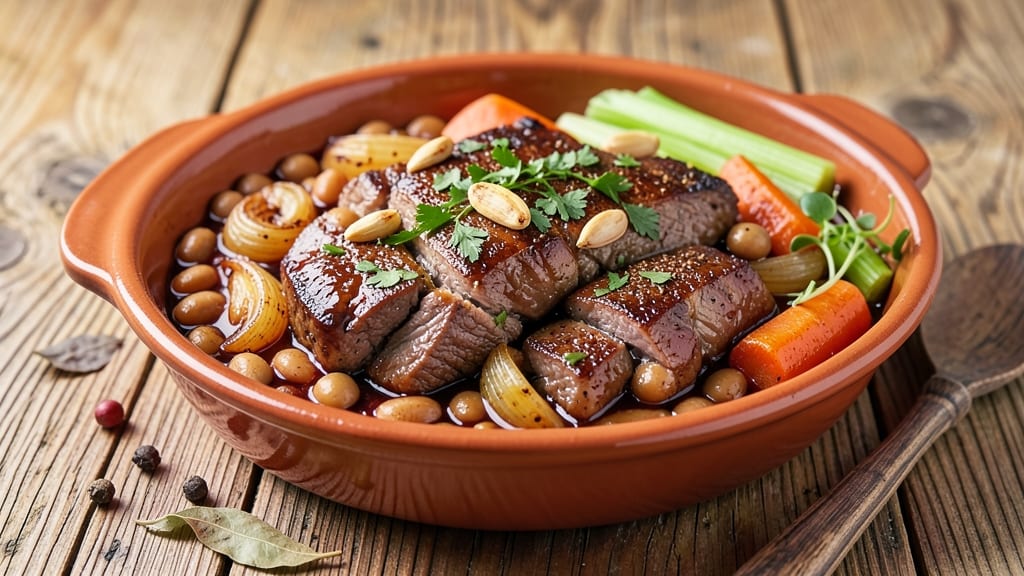
This bean pot roast recipe transforms humble ingredients into a hearty, slow-braised masterpiece that rivals traditional beef versions. 💛 The secret lies in layering flavors—rich tomatoes, aromatic herbs, and tender beans—all simmered until perfectly tender in a Dutch oven.
Unlike quick weeknight meals, this dish rewards patience with deep, complex taste that develops over hours.
What sets this recipe apart is its balance of textures: creamy beans, fork-tender vegetables, and a rich broth that clings to every bite. The slow cooking process breaks down the beans into a velvety consistency while infusing them with the savory aromatics.
It's the kind of dish that tastes even better the next day, making it perfect for meal prep or holiday gatherings.
This vegetarian pot roast delivers restaurant-quality satisfaction without meat—thanks to a blend of cannellini and kidney beans for protein and texture. The dish shines with crispy roasted vegetables on top, adding both visual appeal and contrasting crunch.
Serve it with crusty bread to soak up every last drop of that flavorful broth.
Whether you're using a Dutch oven, slow cooker, or Instant Pot, the technique remains the same: low and slow for maximum flavor development. The recipe scales easily for crowds, and leftovers keep beautifully for up to 5 days. Perfect for chilly evenings when you crave something comforting yet impressive.
Ingredients for bean pot roast
Sixteen ingredients create a vegetarian pot roast with restaurant-worthy depth and texture.
| Ingredient | Amount | Notes |
|---|---|---|
| Dried Cannellini Beans 🌾 | 1 ½ cups | Unsoaked, for velvety texture |
| Dried Kidney Beans 🌾 | 1 cup | Unsoaked, for hearty texture |
| Yellow Onion 🧅 | 1 whole | Diced, for aromatic base |
| Carrots 🥕 | 3 whole | Chopped into 1-inch pieces |
| Celery Stalks 🧄 | 3 whole | Chopped, for classic mirepoix |
| Garlic Cloves 🧄 | 6 cloves | Minced, for deep flavor |
| Tomato Paste 🍅 | ½ cup | High-quality, for rich base |
| Dry Red Wine 🍷 | 1 cup | Bold variety, like Cabernet |
| Vegetable Broth 💧 | 4 cups | Low-sodium, for depth |
| Fresh Rosemary 🌿 | 2 tbsp | Chopped, for aromatic depth |
| Fresh Thyme 🌿 | 1 tbsp | Leaves only, for herbal notes |
| Bay Leaves 🍃 | 2 whole | For subtle earthy flavor |
| Extra-Virgin Olive Oil 🫒 | 2 tbsp | High-quality, for richness |
| Tomatoes 🍅 | 2 whole | Roma, halved for freshness |
| Sea Salt 🧂 | 1 ½ tsp | Diamond Crystal preferred |
| Ground Black Pepper 🌶️ | 1 tsp | Freshly ground for heat |
The beans form the heart of this dish, so choose high-quality dried varieties—cannellini for creaminess and kidney for texture. Trader Joe's and Whole Foods carry excellent options, but any organic brand will work. Soak them overnight for faster cooking, or use the quick-soak method (boiling water for 2 minutes, then resting). The onions, carrots, and celery should be fresh—Wilting vegetables will make the broth taste bitter. For the wine, Cabernet Sauvignon or Merlot adds the best depth, but a bold red like Zinfandel works too. If you prefer not to use alcohol, substitute with additional vegetable broth and a splash of balsamic vinegar.
No fresh herbs? Dried rosemary and thyme (at one-third the amount) will suffice, though fresh delivers superior flavor. The tomato paste should be San Marzano if possible—its sweetness elevates the dish. For a richer sauce, stir in 1 tablespoon of nutritional yeast at the end, which adds a cheesy depth without dairy. If you're using an Instant Pot, skip the wine and add it after pressure cooking to avoid overcooking the beans. The bay leaves can be removed before serving, but leaving them in adds subtle earthiness—just strain them out if you prefer a smoother texture.
This dish tastes even better the next day as flavors meld. Store leftovers in an airtight container in the refrigerator for up to 5 days, or freeze portions for 3 months. For meal prep, double the recipe and freeze half—thaw overnight in the fridge before reheating. The broth reduces significantly, so plan to add extra vegetable broth when reheating. Garnish with fresh herbs or a drizzle of olive oil before serving to brighten the presentation. The crispy roasted vegetables on top? Toss them in olive oil, salt, and pepper, then roast at 425°F for 20 minutes until caramelized.
Why You'll Love This Recipe
- Here’s what sold me: the combo of cannellini and kidney beans gives this dish a meaty, satisfying texture. The onions and celery build layers of flavor—sweet, savory, and just a little smoky if you add a pinch of smoked paprika. It’s the kind of taste that lingers, making you reach for seconds without even thinking.
- I’ll be real: this recipe keeps my grocery bill in check. Dried beans are cheaper than meat, and they stretch into a filling, protein-packed meal. The veggies add freshness without breaking the bank, and leftovers? They’re my secret weapon for feeding a crowd without stress. Plus, it’s the kind of dish that makes you feel like you’re serving something special—even if it’s just beans.
Step-by-step instructions for slow-braised bean pot roast
This method transforms humble ingredients into a rich, hearty stew with tender beans and deep umami flavor.
🥘 Step 1: Sauté the Vegetable Base
Heat the 2 tablespoons extra-virgin olive oil in a large Dutch oven over medium heat. Add the diced onion, chopped carrots, and chopped celery stalks, cooking for 8-10 minutes until the vegetables soften and begin to caramelize at the edges. This foundational step develops the stew's sweet, aromatic base.
Add the minced garlic cloves and cook for an additional 30 seconds until fragrant. The garlic should sizzle gently without burning—this ensures a sweet, mellow flavor rather than bitter notes. Keep the vegetables moving in the pan to prevent sticking while they develop color and texture.
🍳 Step 2: Build the Flavor Foundation
Stir in the ½ cup tomato paste and cook for 2 minutes until it darkens slightly and blends seamlessly with the vegetables. This creates a rich, concentrated base that will carry the flavors throughout the cooking process. Here's the thing—don't rush this step. The tomato paste needs time to develop its full depth of flavor.
Pour in the 1 cup dry red wine and scrape up any browned bits from the bottom of the pot with a wooden spoon. This deglazing step captures all the concentrated flavors that have built up during the sautéing process. Let the wine simmer for 3-4 minutes until it reduces by about half, intensifying its flavor profile.
🥘 Step 3: Layer the Beans and Seasonings
Add the 1.5 cups dried cannellini beans and 1 cup dried kidney beans to the pot, spreading them evenly over the vegetable mixture. Pour in the 4 cups vegetable broth, then add the halved Roma tomatoes, chopped rosemary, thyme leaves, bay leaves, 1.5 teaspoons sea salt, and 1 teaspoon ground black pepper.
Bring the mixture to a gentle boil, then immediately reduce the heat to low. The beans should be just below a simmer—you'll see small bubbles forming occasionally, but not a vigorous boil. This gentle cooking method prevents the beans from becoming mushy while allowing them to absorb all the surrounding flavors.
⏰ Step 4: Slow Braise Until Tender
Cover the Dutch oven with a tight-fitting lid and transfer it to a 325°F oven. Here's where patience pays off—braise the beans for 2 to 2.5 hours, checking periodically to ensure there's always some liquid in the pot. If the liquid level gets too low, add ½ cup water to maintain the proper consistency.
About 45 minutes before the beans are done, taste them to check for doneness. They should be tender but still hold their shape—if they're falling apart, they've been cooking too long. The beans should be velvety and creamy, with a rich, complex flavor that comes from the slow cooking process.
🍽️ Step 5: Adjust and Serve
Once the beans reach perfect tenderness, remove the pot from the oven and discard the bay leaves. Taste the stew and adjust the seasoning if needed—you may need a touch more salt or pepper to balance the flavors. The beans should be perfectly seasoned, with a harmonious blend of the wine's acidity, the tomatoes' sweetness, and the herbs' earthy notes.
Serve the bean pot roast immediately, ladling the beans and vegetables onto warm plates. The stew should be thick but still spoonable, with each bite delivering tender beans, caramelized vegetables, and a rich, flavorful broth. Pair it with crusty bread to soak up every last drop of this comforting, hearty dish.
Pro Tips For Making Bean Pot Roast
- SOAK BEANS OVERNIGHT: I learned this the hard way—rushing the soak with dried beans leaves them tough no matter how long you simmer. Use a big bowl, cover with water by 2 inches, and let them sit 12+ hours. The next day, drain and rinse before adding to the pot—this cuts down on gassiness and keeps the broth clear. (Yes, even if you’re impatient like me.)
- SEAR THE VEGETABLES FIRST: Don’t just toss the onions, carrots, and celery into the pot raw—they’ll turn to mush and water down the broth. Sear them in batches over medium-high heat for 5–7 minutes until deeply browned. This builds flavor that soaks into the beans like a slow-cooked hug.
- SKIP THE CROWDED POT: Packing the pot too tight means the beans and veggies steam instead of caramelize. Arrange them in a single layer at the bottom, then nestle the meat (if using) on top. If the pot’s too small, cook in batches—this guarantees tender beans, not a sad, watery stew.
- USE BOTH BEAN LIQUIDS: After draining soaked beans, save that starchy water—it’s liquid gold for the pot. Add it to the cooking liquid (along with broth or water) to thicken the sauce naturally. I was skeptical until I tried it: the beans stay creamier, and the broth tastes richer without extra flour or cornstarch.
Serving suggestions for this bean pot roast
Crusty Bread Pairing
Nothing beats the classic combo of this bean pot roast with warm, crusty bread—think a baguette or sourdough from your local bakery. The bread soaks up the rich broth beautifully, turning each bite into a flavorful experience.
I love toasting slices with garlic-infused olive oil and sprinkling with flaky sea salt before serving. For extra indulgence, try a ciabatta roll with a hole cut in the center—it creates a perfect well for the stew. 🥖
Roasted Vegetable Toppings
Add a crispy, caramelized element by roasting sweet potatoes, butternut squash, or Brussels sprouts> at 425°F for 20-25 minutes until golden. Toss them with 1 tbsp olive oil, ½ tsp smoked paprika, and a pinch of salt.
The contrast between the creamy beans and crunchy veggies elevates every spoonful. I also like adding toasted pine nuts or pecans for a nutty crunch.
Fresh Herbs Garnish
Brighten the dish with a final touch of freshness using chopped parsley or cilantro right before serving. The vibrant green color makes the pot roast look restaurant-worthy, and the fresh herbs add a bright, herbal note that cuts through the richness.
For extra flair, drizzle with high-quality extra-virgin olive oil> or a sprinkle of nutritional yeast for a cheesy depth. A squeeze of lemon juice also adds a zesty lift. ✨
Cheesy Crumb Topping
For a decadent twist, create a cheesy crumb topping by mixing ½ cup breadcrumbs, ¼ cup grated Parmesan cheese, 2 tbsp melted butter, and 1 tsp dried oregano. Spread it over the pot roast during the last 15 minutes> of baking in the oven.
The result? A golden, crispy crust that adds texture and richness. This works especially well if you're serving it as a main dish for a cozy dinner.
Side Salad Balance
A light, crisp salad balances the heartiness of the pot roast perfectly. Try a mix of arugula, shredded cabbage, and thinly sliced fennel>, tossed with a lemon vinaigrette> (2 tbsp olive oil, 1 tbsp lemon juice, 1 tsp Dijon mustard, salt, and pepper).
The peppery arugula and crunchy cabbage provide a refreshing contrast to the creamy beans. For extra protein, add toasted walnuts> or crumbled feta cheese.
Warm Polenta Accompaniment
For a creamy, comforting side, serve the pot roast with creamy polenta> made from 1 cup cornmeal, 4 cups vegetable broth, and 2 tbsp butter.
Cook it over low heat until thick and smooth, then stir in ½ cup grated Parmesan> and a pinch of salt. The polenta's silky texture pairs beautifully with the hearty stew, making each bite even more satisfying. 💛
Nutrition facts
Frequently asked questions
Can I substitute cannellini beans with another type?
Swap cannellini beans for great northern beans or navy beans—they’ll give a similar creamy texture. For extra heartiness, use black beans or pinto beans, but soak them longer (at least 8 hours) to prevent mushiness. The key is maintaining a mix of textures—creamy and firm—to keep the dish balanced.
Why does my bean pot roast taste watery?
Watery texture usually means the beans weren’t cooked long enough or the liquid wasn’t reduced properly. Simmer uncovered for 10-15 minutes at the end to thicken the broth, or stir in 1 tablespoon cornstarch mixed with 2 tablespoons water to bind it. For next time, check the liquid level every 30 minutes—add broth only if it drops below ½ inch above the beans.
Can I make this in a slow cooker or Instant Pot?
Yes! For a slow cooker, combine all ingredients and cook on low for 6-7 hours or high for 4 hours. For the Instant Pot, sauté the veggies first, then add everything else and pressure cook for 25 minutes (natural release). Skip the wine in the Instant Pot to avoid overcooking—add it after pressure cooking. Both methods work, but the oven version develops deeper flavors.
How do I make it spicier?
Add ½ teaspoon smoked paprika, ¼ teaspoon cayenne pepper, or 1-2 diced chipotle peppers in adobo sauce when sautéing the vegetables. For heat without dryness, stir in 1 tablespoon hot sauce at the end. Fresh red pepper flakes or a dash of Aleppo pepper also work beautifully. Adjust to taste—start small and add more later!
Can I prep this ahead of time?
This dish tastes even better the next day! Cook it fully, then refrigerate in an airtight container for up to 5 days. Reheat gently on the stove over low heat, adding a splash of broth if needed. For freezing, portion into containers and freeze for 3 months. Thaw overnight in the fridge before reheating—never microwave directly from frozen.