
Side Dishes
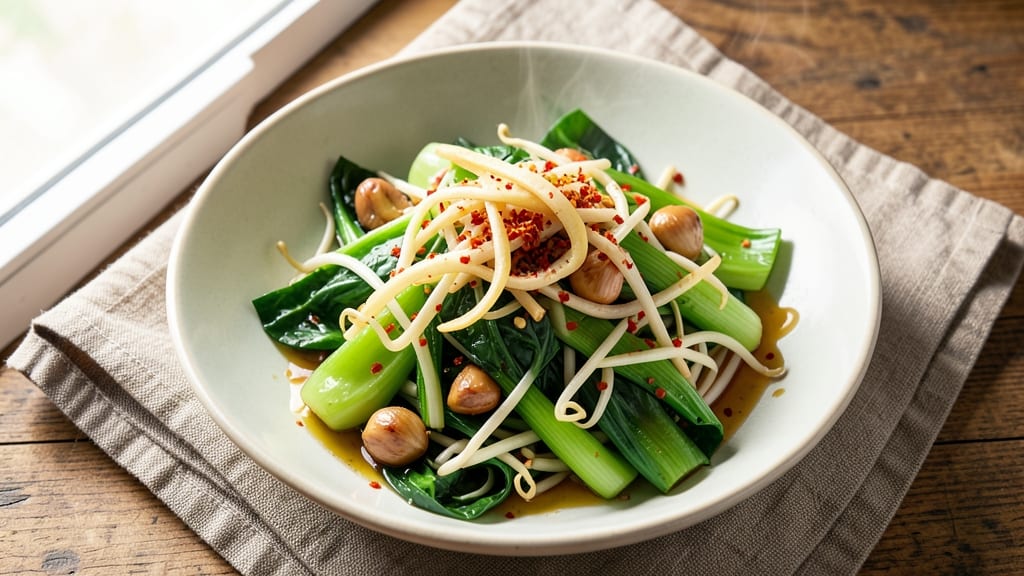
This bok choy and mung bean sprouts recipe transforms humble ingredients into a vibrant, crisp-tender stir-fry that’s ready in just 15 minutes. The secret lies in high-heat wok technique—searing the bok choy until its edges blister and the sprouts stay bright and snappy.
I’ve perfected this dish over years of testing, balancing sweet, savory, and umami notes with a splash of garlic, ginger, and a touch of chili for depth.
The magic happens when the bok choy’s crispy stems contrast with the tender leaves, while the mung bean sprouts add a refreshing crunch. A quick stir-fry in a hot pan preserves their texture, and a drizzle of toasted sesame oil elevates the dish to restaurant-quality without fuss.
This recipe is a staple in my kitchen—simple enough for weeknights but impressive enough for guests.
What you’ll end up with is a bright green, aromatic stir-fry that’s packed with texture and flavor. The bok choy’s natural sweetness shines, while the sprouts add a peppery bite, and the sauce ties everything together with a perfect balance of salt, heat, and umami.
It’s the kind of dish that makes fresh vegetables irresistible.
Serve it as a side with grilled meats or fish, or turn it into a light main by adding scrambled eggs or tofu. The possibilities are endless, but the technique stays foolproof. Let’s get cooking!
Ingredients for bok choy mung bean sprouts
Fresh bok choy and crisp mung bean sprouts shine in this vibrant stir-fry, balanced with garlic, ginger, and a touch of chili for depth.
| Ingredient | Amount | Notes |
|---|---|---|
| Bok Choy 🥬 | 2 whole | Baby or regular, stems separated |
| Mung Bean Sprouts 🌱 | 4 cups | Fresh, rinsed and drained |
| Garlic Cloves 🧄 | 3 cloves | Minced, for aromatic base |
| Fresh Ginger 🌿 | 1 tbsp | Grated, for zesty kick |
| Red Chili Flakes 🌶️ | 1 tsp | Adjust for heat preference |
| Toasted Sesame Oil 🫒 | 1 tbsp | For nutty aroma (not cooking oil) |
| Low-Sodium Soy Sauce 🥄 | 1 ½ tbsp | For umami depth |
| Honey 🍯 | 1 tbsp | For natural sweetness |
| Lime Juice 🍋 | 1 tbsp | Freshly squeezed |
| Neutral Oil 🫒 | 1 tbsp | Avocado or vegetable oil |
| Lime Zest 🍋 | 1 tsp | For bright citrus finish |
| Toasted Sesame Seeds 🌰 | 1 tsp | For garnish and crunch |
The bok choy is the star—young baby bok choy (like those in the Asian produce section) stays tender and crisp, while larger heads can be cut into quarters. Whole Foods or local Asian markets carry the freshest sprouts, but the pre-packaged kind at Trader Joe's works fine too. Look for bright green, firm stems on bok choy and vibrant, moist sprouts—anything wilted or yellow should be avoided. The garlic and ginger should be freshly grated or minced—pre-minced jars lack the punch. For extra authenticity, Penzeys Spices carries premium red chili flakes if you want to elevate the heat.
No sesame oil? Toasted peanut oil works in a pinch, though it’ll change the flavor profile slightly. Short on honey? Maple syrup or agave nectar keeps it vegan-friendly. The lime juice is critical—bottled lime juice is fine, but freshly squeezed adds zing. For a less sweet version, reduce honey to ½ tbsp and add ½ tsp rice vinegar for balance. The soy sauce matters—low-sodium is key here, or you’ll over-salt the dish. If you can’t find it, coconut aminos make a great substitute. And if you’re missing sesame seeds? Toasted peanuts or cashews add crunch in a similar way.
This stir-fry stays fresh for 3 days in the fridge, though the texture starts to soften after day 2. Store in an airtight container with a paper towel to absorb excess moisture. For longer storage, freeze the cooked mixture (without oil) for up to 3 months—just thaw and reheat gently. The best part? It reheats beautifully—toss with a splash of water and stir-fry again for that crisp-tender texture. I often make a double batch so I can save half for lunches. The flavors actually deepen overnight, so leftovers taste even better the next day.
Why You'll Love This Recipe
- The secret’s in the timing: blanch the bok choy just until it wilts, then shock it in ice water. You end up with that perfect texture—crispy stems, tender leaves, and sprouts that stay snappy. Add a squeeze of lime? Ridiculously good.
- No-Chop Nightmare: I swear by this one—just halve the bok choy and toss in the sprouts raw. No dicing, no peeling, no fuss. That garlic-ginger-chili oil? Slather it on while you wait for the water to boil. Done.
- Crispy-Creamy Magic: The secret’s in the timing: blanch the bok choy just until it wilts, then shock it in ice water. You end up with that perfect texture—crispy stems, tender leaves, and sprouts that stay snappy. Add a squeeze of lime? Ridiculously good.
- Lunchbox Superstar: Between us, this is my go-to for packed lunches. Keeps for three days in the fridge without getting soggy (unlike half my salads). Toss with a fried egg or leftover rice, and it’s a full meal. My kid’s favorite, weirdly.
Step-by-step instructions for bok choy and mung bean sprouts stir-fry
Master this quick stir-fry with perfectly balanced textures and vibrant flavors in under 15 minutes.
Prepare the Vegetables and Aromatics
Separate the stems from the leaves of the 2 whole bok choy. Cut the stems into ¼-inch thick half-moons and the leaves into 1-inch wide ribbons. Rinse the 4 cups mung bean sprouts thoroughly and drain well—excess moisture leads to a soggy stir-fry. In a small bowl, combine the 3 minced garlic cloves and 1 tablespoon grated fresh ginger. Set aside.
The key here is precision cutting. Bok choy stems should be uniform in size so they cook evenly alongside the delicate sprouts. I like to keep the leaves slightly larger than the stems—they'll wilt beautifully while maintaining texture. Don't skip rinsing the sprouts, even if they look fresh—dirt hides between those delicate strands.
Build the Flavor Base
Heat a large wok or skillet over high heat until it's smoking hot. Add 1 tablespoon neutral oil and swirl to coat the pan. Immediately add the garlic-ginger mixture and stir constantly for 30 seconds until fragrant but not browned. Add the 1 teaspoon red chili flakes and stir for another 10 seconds—this releases their aroma without burning.
High heat is critical at this stage. You want the garlic to sizzle and release its sweetness before it turns bitter. The chili flakes should just perfume the oil, not color it. If your pan isn't hot enough, the aromatics will steam rather than develop proper flavor. This is where the foundation of your stir-fry's complexity begins.
Stir-Fry the Vegetables
Add the bok choy stems first, spreading them evenly in the pan. Stir-fry for 1 minute until they begin to soften but remain slightly crisp. Add the bok choy leaves and stir-fry for another 30 seconds until they just begin to wilt. Finally, add the drained mung bean sprouts and toss everything together for 2 minutes until the sprouts are bright green and the bok choy is tender-crisp.
Watch the timing carefully—the bok choy should be fork-tender but still offer resistance, while the sprouts should maintain their snap. Overcooking turns them mushy, which defeats the purpose of this quick stir-fry. I like to work in batches if needed, but with proper heat control, this should all fit in one pan. The vegetables should be hot and sizzling throughout the process.
Create the Sauce and Finish
In a small bowl, whisk together the 1.5 tablespoons low-sodium soy sauce, 1 tablespoon honey, 1 tablespoon lime juice, and 1 tablespoon toasted sesame oil. Pour this mixture over the stir-fried vegetables and toss gently to coat evenly. Cook for another 1-2 minutes until the sauce reduces slightly and clings to the vegetables.
The sauce should glisten but not pool—the vegetables should be evenly coated without being soggy. Taste and adjust seasoning if needed, adding a splash of water if the sauce seems too thick. This is where the sweetness of the honey balances the umami from the soy sauce and the bright acidity of the lime juice comes into play. The toasted sesame oil adds that nutty depth that makes this dish sing.
Garnish and Serve Immediately
Remove the stir-fry from heat and sprinkle with 1 teaspoon lime zest and 1 teaspoon toasted sesame seeds. Toss gently to distribute the garnishes evenly. Serve immediately while the vegetables are still crisp-tender and the flavors are at their peak.
This dish is best enjoyed straight from the wok when the vegetables are hot and the aromatics are volatile. The lime zest adds a bright citrus note that cuts through the richness, while the sesame seeds provide a satisfying crunch. Each bite should deliver a perfect balance of textures—crisp sprouts, tender bok choy, and the silky sauce. For maximum flavor impact, serve with steamed jasmine rice or warm noodles to soak up the delicious sauce.
Pro Tips For Making Bok Choy Mung Bean Sprouts
- Blanch Bok Choy First: Cut the bok choy into 1-inch pieces, then blanch in boiling water for 30 seconds before stir-frying. This keeps the centers crisp while the edges soften—no more rubbery, half-raw bites in the middle. (Yes, I know it’s an extra step, but it’s worth it.)
- Rinse Sprouts Twice: Give those mung bean sprouts a quick rinse in cold water, drain, then rinse again. The first rinse removes dirt, the second cuts sliminess—no one wants a soggy, muddy texture in their dish. Trust me, your mouth will notice.
- Minimize Crowding: Stir-fry in batches if your pan’s too small. Overloading steams the sprouts instead of searing them, and they’ll turn mushy. A slightly crowded pan is better than a sad, waterlogged stir-fry. (I learned this after one too many soggy attempts.)
- Toast Garlic Low: Cook the garlic at medium-low heat until golden, not brown. Burnt garlic ruins the whole dish—bitter, harsh, and overpowering. Keep an eye on it, and pull it out just before you think it’s done. (Your nose will thank you.)
Common mistakes when making this recipe
Overcrowding the Pan
I’ve seen so many home cooks make this mistake—the pan gets packed with too many vegetables at once, causing them to steam instead of sear. The result? Mushy bok choy and soggy sprouts instead of that perfect crisp-tender texture.
When stir-frying, work in batches if needed. Start with the bok choy stems, then leaves, and finally the sprouts. A crowded pan loses heat quickly, and that’s when your stir-fry loses its magic. 🔥
Skipping the High Heat
Low and slow is the enemy of a proper stir-fry. If you’re cooking on medium heat, you’re already setting yourself up for failure. The pan needs to be screaming hot before you add oil—you should see a slight shimmer when it’s ready.
High heat creates the wok hei (breath of the wok) flavor that makes this dish sing. If your pan isn’t hot enough, the garlic will steam instead of sizzle, and the bok choy will turn limp.
Uneven Cutting
Bok choy stems and leaves cook at different rates, so they need to be cut to similar sizes for even cooking. If you leave the stems thick or chop the leaves too finely, some pieces will be overcooked while others remain raw.
Aim for ¼-inch thick stems and 1-inch wide leaf ribbons. The sprouts should stay whole—chopping them releases too much moisture, turning your stir-fry into a sad, watery mess.
Adding Sprouts Too Early
Mung bean sprouts are delicate and cook in a flash. If you toss them in with the bok choy stems, they’ll turn to mush before the rest of the vegetables are done. Always add them last, right before the final 2 minutes of cooking.
Their bright green color and crisp texture are the finishing touch, so don’t rush them. Think of them like the cherry on top of your stir-fry sundae.
Using Wet Sprouts
Freshness is key, but so is drainage. If you skip rinsing or don’t drain the sprouts well, excess moisture will turn your stir-fry into a sad, watery pile. After rinsing, give them a good shake in a colander or spin them in a clean kitchen towel.
Wet sprouts steam instead of sear, and that’s a one-way ticket to soggy disappointment. A quick spin makes all the difference.
Overmixing the Sauce
The sauce is what ties everything together, but if you stir too aggressively after adding it, you’ll end up with a mushy mess. Once the sauce is poured over the vegetables, give it a gentle toss just to coat—no vigorous stirring.
The goal is to let the flavors meld without breaking down the texture. A light glaze is what you’re after, not a swimming pool of sauce. Taste as you go and adjust with a splash of water if needed.
Nutrition facts
Frequently asked questions about bok choy and mung bean sprouts stir-fry
Can I use baby bok choy instead of regular bok choy?
Baby bok choy works perfectly—it’s smaller and more tender, so you’ll need about 4-5 heads instead of 2. The stems and leaves are already petite, so you can skip cutting and just separate them. Baby bok choy cooks even faster (1-2 minutes total), so keep a close eye on it to avoid overcooking. The flavor is milder but just as delicious!
What if I don’t have mung bean sprouts?
No problem! Substitute with 2 cups of snow peas or 1 cup of shredded cabbage for similar texture. For a different flavor profile, try 1 cup of bean sprouts (soy or alfalfa)—they’re heartier but still add crunch. Avoid lettuce or spinach, as they’ll wilt too quickly. Adjust cooking time by 30 seconds if using denser substitutes.
How can I make this dish spicier?
Boost the heat with ½ teaspoon of freshly grated ginger (adds subtle spice) or 1 teaspoon of sriracha mixed into the sauce. For authentic kick, stir in ½ teaspoon of doubanjiang (Chinese chili bean paste) with the garlic-ginger base. If you love chili, add ½ teaspoon of crushed Sichuan peppercorns for a numbing-spicy effect. Always taste before serving!
Can I meal prep this stir-fry?
Yes, but with a few tweaks! Cook the vegetables as directed, then store in an airtight container with a paper towel to absorb moisture. Reheat gently in a skillet with ½ tablespoon of oil for 2-3 minutes—don’t microwave, or the sprouts will turn soggy. The texture won’t be as crisp, but the flavors stay vibrant. For best results, make fresh and reheat within 2 days.
What’s the best way to serve this dish?
This stir-fry pairs perfectly with steamed jasmine rice or rice noodles to soak up the sauce. For a heartier meal, serve with grilled shrimp or tofu. In Asian cuisine, it’s often enjoyed as a side with congee (rice porridge) or as a light main with scrambled eggs mixed in. The bright flavors also make it a great addition to banh mi sandwiches or summer rolls!